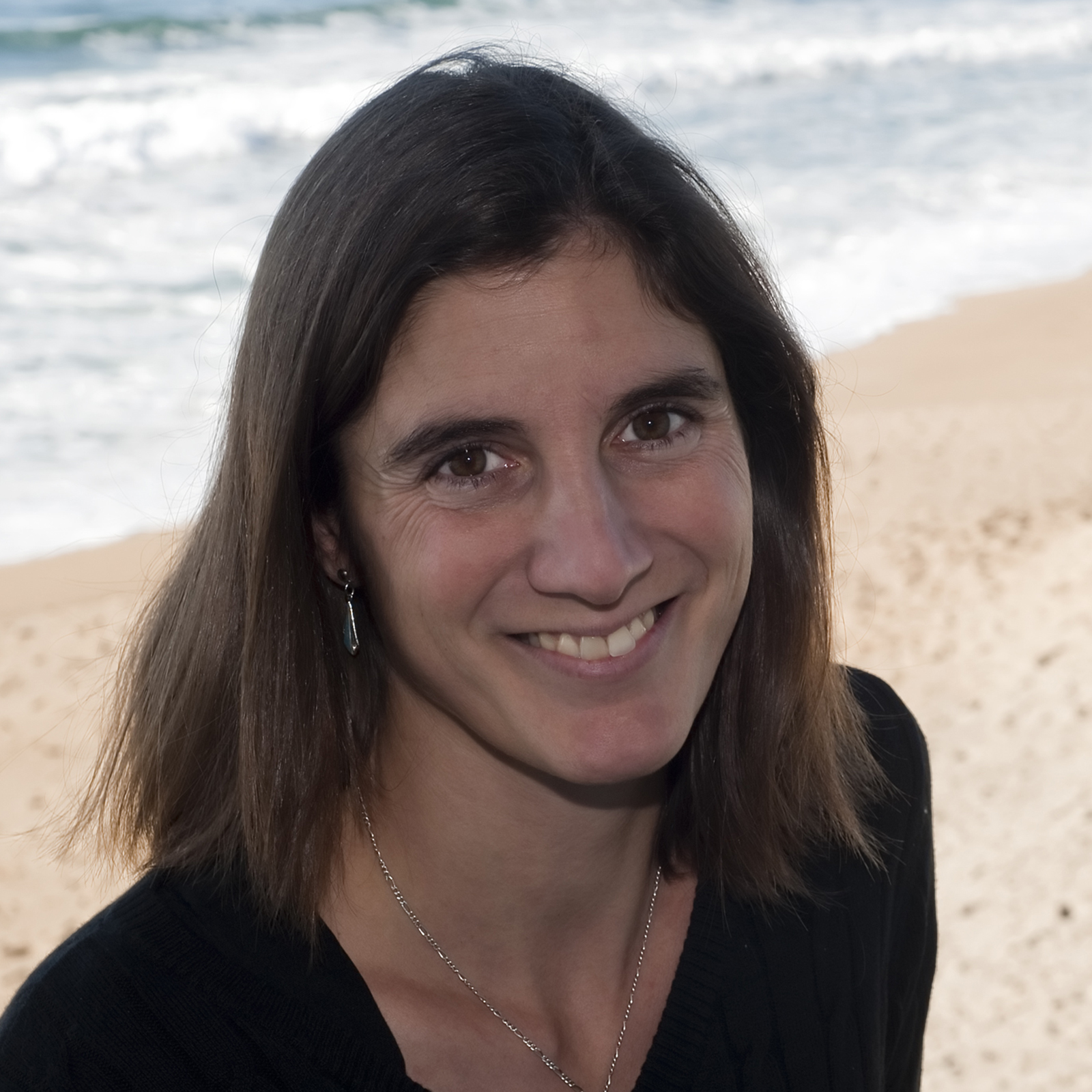
Dr. Monique Messié | Monterey Bay Aquarium Research Institute

Presenting: "Coupling and decoupling between upwelling and biological response in Eastern Boundary Upwelling Systems"

Hosted by: Physical Oceanography Lab

MLML Seminar | November 4th, 2025 at 4pm (PDT)

Watch the Live Stream here or here

Coupling and decoupling between upwelling and biological response in Eastern Boundary Upwelling Systems
Eastern Boundary Upwelling Systems support productive marine ecosystems fueled by coastal upwelling, which supplies nutrients into the ocean sunlit surface layer. However, upwelling and biology can become decoupled due to the combined effects of biology-mediated temporal lags and/or persistence, and horizontal advection by surface currents. This decoupling makes it challenging to identify how upwelling drives biological patterns and requires searching beyond conventional correlation analysis. In this talk, I will show how we can uncover the link between upwelling and biological response, including plankton, carbon export, and deep-sea animals, by using minimalistic mechanistic models. I will also present how the knowledge gained can be used to predict upwelling-driven biological changes across broad spatial regions.


Dr. Monique Messié

Monique Messié is a biological oceanographer who integrates data from different disciplines (from physics to ecosystems), different instruments (from AUVs to satellites), and different regions (from Monterey Bay to global) to study ecosystem processes and physical/biological interactions in both coastal regions and open oceans. She analyzes data using statistical and machine learning techniques to investigate relationships between physics and biology in the ocean, and tests them using mathematical models. She is a Senior Research Specialist at the Monterey Bay Aquarium Research Institute (MBARI) following a PhD at Paul Sabatier University (Toulouse, France) and MSc from Ecole Centrale Paris and Pierre and Marie Curie University (Paris, France).

Seminar – New biologging approaches for studying marine species and ecosystems

Dr. Aaron Carlisle | University of Delaware

Presenting: "New biologging approaches for studying marine species and ecosystems"

Hosted by: Ichthyology Lab

MLML Seminar | October 7th, 2025 at 4pm (PDT)

Watch the Live Stream here or here

New biologging approaches for studying marine species and ecosystems

Biologging approaches, or the use of animal-borne electronic tags for logging and/or relaying of biological and environmental data, are advancing at a rapid pace, providing new ways for studying marine species and their environment. Our research group, the Trophic and Spatial Ecology Research Lab (TRASER) at the University of Delaware, is working to advance biologging technology to improve our ability to obtain in situ data on the behavior, physiology, and habitats of mobile marine species to improve our understanding of their ecology as well as foster improved management of marine ecosystems in a rapidly changing ocean. In this seminar, I will provide an overview of our research in developing the use of sharks as ocean observing platforms that will improve our ability to obtain near-real time oceanographic data from these highly mobile species, improving the type and scale of data available to various oceanographic models. I will also discuss our ongoing effort to integrate biologging tags with lab-derived estimates of physiological parameters with high resolution behavioral and environmental data to understand how the physiology of an organism interacts with the environment to influence its distribution and ecology across spatial and temporal scales.

Dr. Aaron Carlisle

Dr. Carlisle is an Associate Professor in the School of Marine Science and Policy at the University of Delaware. His lab's research focuses on how the abiotic and biotic environment and organismal biology interact to influence the behavior, distribution and ecology of species, and how these interactions impact their population dynamics, life history strategies, and ecosystem roles.We use a variety of approaches and technologies, such as stable isotope analysis and biologging, combined in new ways to provide unique insights into marine species. Dr. Carlisle is a graduate of Stanford University (Ph.D.), Moss Landing Marine Laboratories (M.S.), and Princeton University (A.B.).

Seminar – The (Real) Geologic History of the Stanislaus Table Mountains and Yosemite Valley

Dr. Manny Gabet | San Jose State University

Presenting: "The (Real) Geologic History of the Stanislaus Table Mountains and Yosemite Valley"

Hosted by: Geological Oceanography Lab

MLML Seminar | September 30th, 2025 at 4pm (PDT)

Watch the Live Stream here or here

The (Real) Geologic History of the Stanislaus Table Mountains and Yosemite Valley

In 1865, J.D. Whitney published a hypothesis, originally proposed by his colleague Ian Brewer, that the Stanislaus Table Mountains were a form of ‘inverted topography.’ According to this theory, a 10-million year old lava flow had travelled down a mountain canyon and solidified along the river bed. Over time, the adjacent valley walls had eroded down, transforming the lava-capped river bed into a series of ridges that are now recognized as the table mountains. Furthermore, Whitney reasoned that this much erosion could only have been accomplished as a result of tilting and uplift of the Sierra Nevada. Whitney’s explanation was the genesis for the dominant theory that the Sierra Nevada is a relatively young range, having popped up only in the past 5-10 million years. Similarly, the initial formation of Yosemite Valley has also been attributed to recent uplift. In my talk, I will present evidence demonstrating that the Stanislaus River watershed has not undergone any dramatic transformations and that, instead, it looks very much like it did 30-40 million years ago. In addition, I will present evidence showing that Yosemite Valley was initially cut by a river draining a large volcanic plain that once buried the crest of the northern Sierra. Both of these studies, as well as others, contribute to a growing body of evidence that the Sierra Nevada is an ancient range, rising up at least ~40 million years ago.

Dr. Manny Gabet

I’m a geomorphologist, which means I study how landscapes evolve over time. Some of my past research has focused on erosion in the Himalayas, the role of fires in triggering debris flows in Montana, and the mechanics of landslides. More recently, I’ve been investigating the geologic history of the Sierra Nevada over the past 40 million years and have been discovering that the dominant theory on the age of the mountain range is not supported by the evidence.