
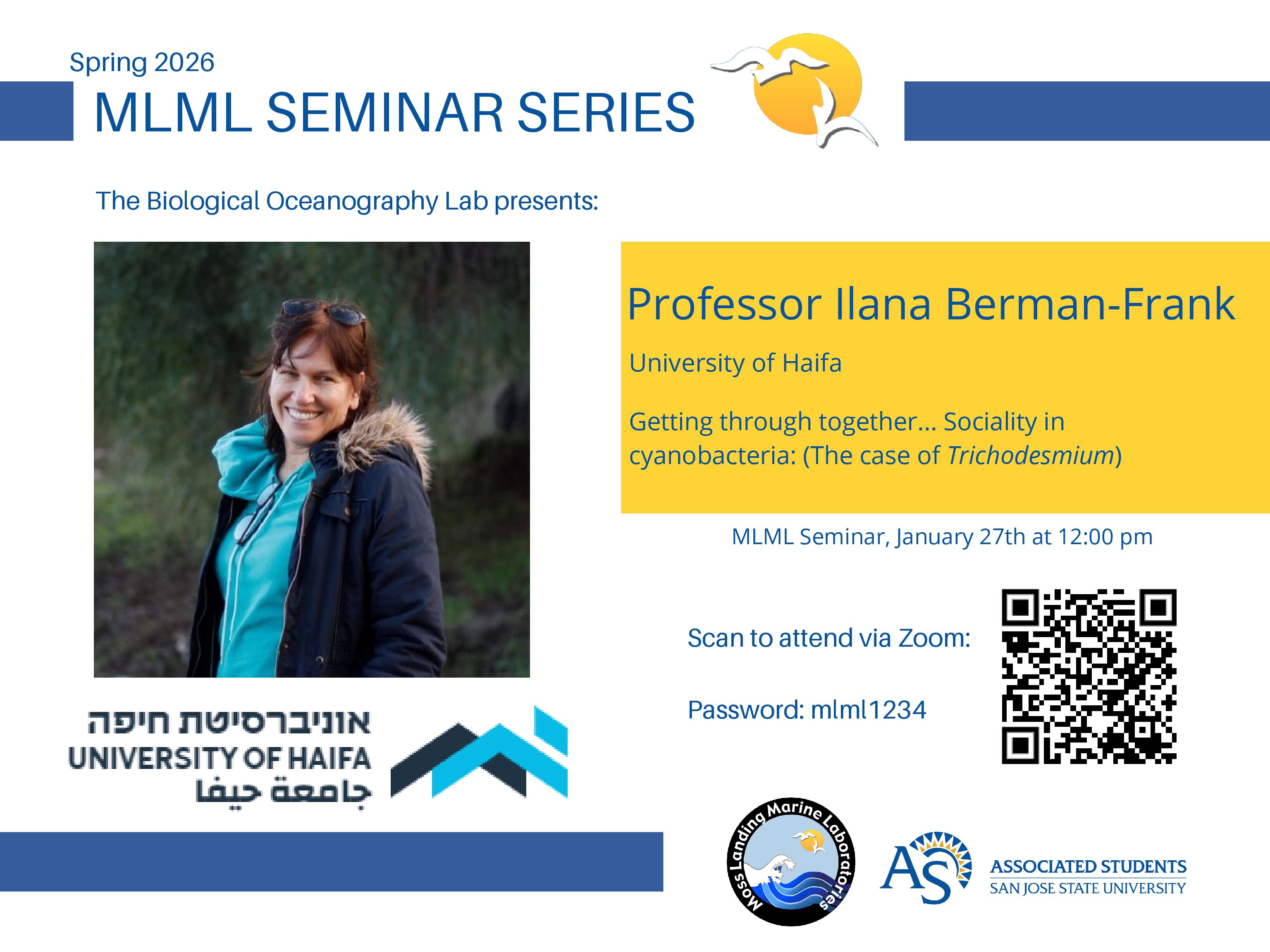
"Getting through together… Sociality in cyanobacteria: (The case of Trichodesmium)"
January 27th at 12:00 pm
past seminar talks.
Dr. Monique Messié | Monterey Bay Aquarium Research Institute
Presenting: "Coupling and decoupling between upwelling and biological response in Eastern Boundary Upwelling Systems"
Hosted by: Physical Oceanography Lab
MLML Seminar | November 4th, 2025 at 4pm (PDT)
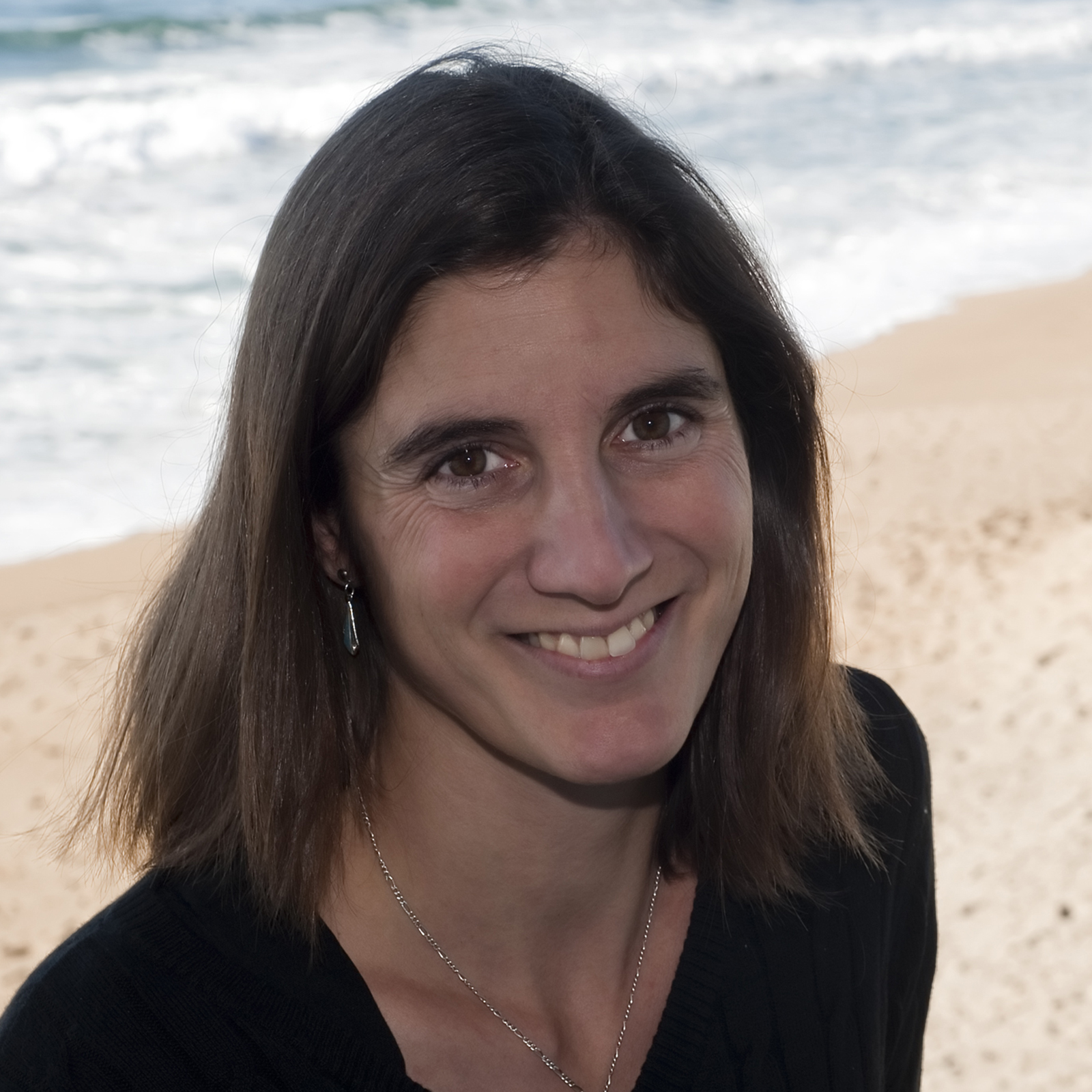
Dr. Monique Messié
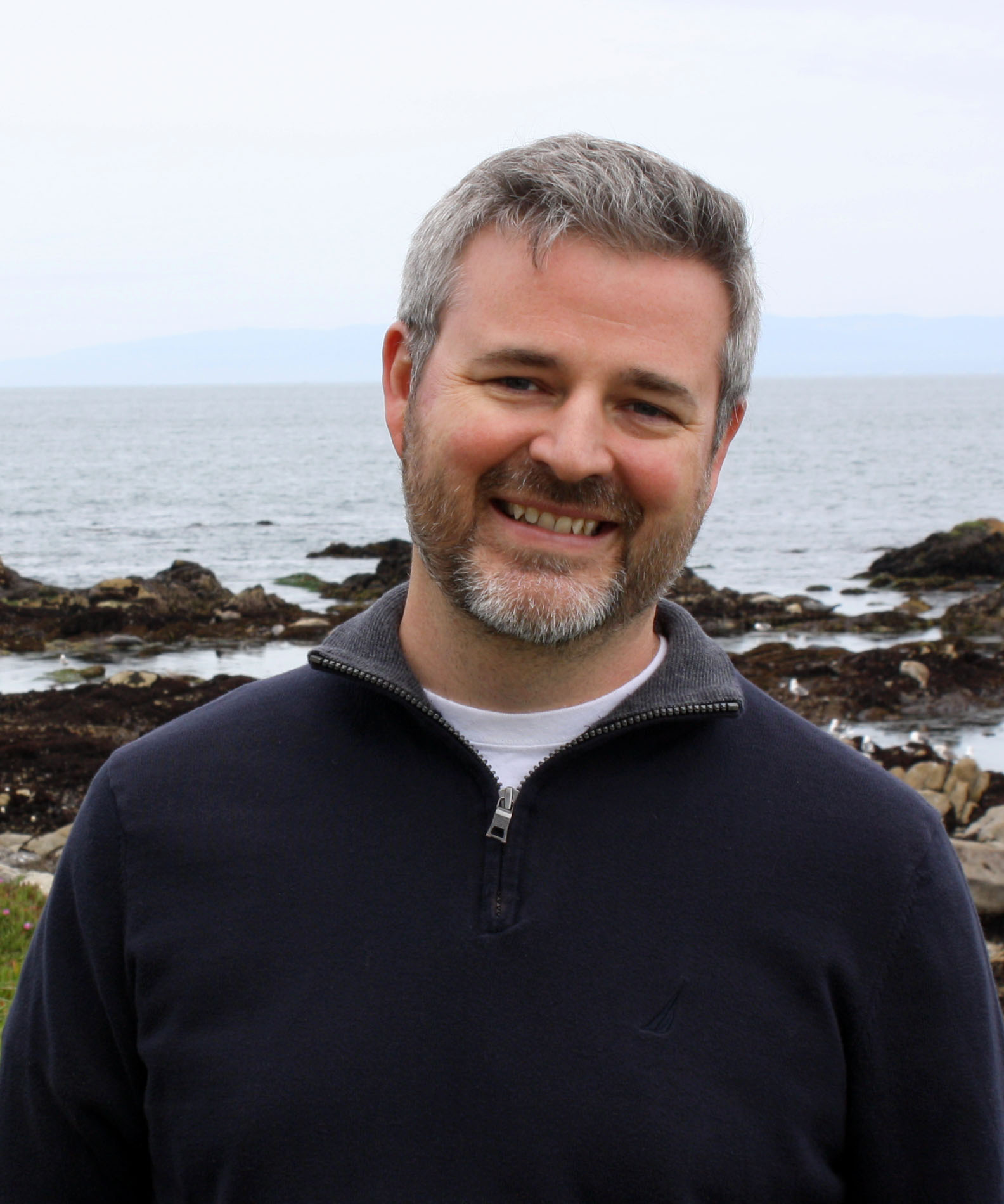
Dr. Aaron Carlisle | University of Delaware
Presenting: "New biologging approaches for studying marine species and ecosystems"
Hosted by: Ichthyology Lab
MLML Seminar | October 7th, 2025 at 4pm (PDT)
New biologging approaches for studying marine species and ecosystems
Biologging approaches, or the use of animal-borne electronic tags for logging and/or relaying of biological and environmental data, are advancing at a rapid pace, providing new ways for studying marine species and their environment. Our research group, the Trophic and Spatial Ecology Research Lab (TRASER) at the University of Delaware, is working to advance biologging technology to improve our ability to obtain in situ data on the behavior, physiology, and habitats of mobile marine species to improve our understanding of their ecology as well as foster improved management of marine ecosystems in a rapidly changing ocean. In this seminar, I will provide an overview of our research in developing the use of sharks as ocean observing platforms that will improve our ability to obtain near-real time oceanographic data from these highly mobile species, improving the type and scale of data available to various oceanographic models. I will also discuss our ongoing effort to integrate biologging tags with lab-derived estimates of physiological parameters with high resolution behavioral and environmental data to understand how the physiology of an organism interacts with the environment to influence its distribution and ecology across spatial and temporal scales.
Dr. Aaron Carlisle
Dr. Manny Gabet | San Jose State University
Presenting: "The (Real) Geologic History of the Stanislaus Table Mountains and Yosemite Valley"
Hosted by: Geological Oceanography Lab
MLML Seminar | September 30th, 2025 at 4pm (PDT)
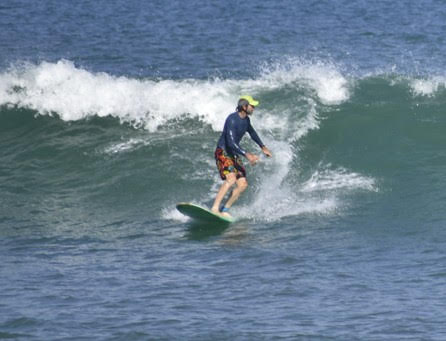
The (Real) Geologic History of the Stanislaus Table Mountains and Yosemite Valley
In 1865, J.D. Whitney published a hypothesis, originally proposed by his colleague Ian Brewer, that the Stanislaus Table Mountains were a form of ‘inverted topography.’ According to this theory, a 10-million year old lava flow had travelled down a mountain canyon and solidified along the river bed. Over time, the adjacent valley walls had eroded down, transforming the lava-capped river bed into a series of ridges that are now recognized as the table mountains. Furthermore, Whitney reasoned that this much erosion could only have been accomplished as a result of tilting and uplift of the Sierra Nevada. Whitney’s explanation was the genesis for the dominant theory that the Sierra Nevada is a relatively young range, having popped up only in the past 5-10 million years. Similarly, the initial formation of Yosemite Valley has also been attributed to recent uplift. In my talk, I will present evidence demonstrating that the Stanislaus River watershed has not undergone any dramatic transformations and that, instead, it looks very much like it did 30-40 million years ago. In addition, I will present evidence showing that Yosemite Valley was initially cut by a river draining a large volcanic plain that once buried the crest of the northern Sierra. Both of these studies, as well as others, contribute to a growing body of evidence that the Sierra Nevada is an ancient range, rising up at least ~40 million years ago.
Dr. Manny Gabet
Dr. Dimitris Menemenlis | Moss Landing Marine Labs, SJSURF
Presenting: "Ocean fronts, eddies, and internal waves in numerical models and SWOT"
Hosted by: Physical Oceanography Lab
MLML Seminar | September 23rd, 2025 at 4pm (PDT)
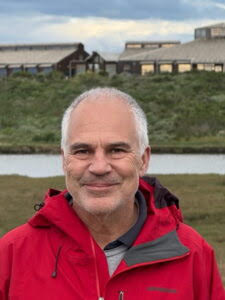
The ocean is the climate's largest reservoir of heat, freshwater, and carbon. Therefore, in order to understand and predict the impact of natural and anthropogenic perturbations on the climate system, we need to understand and predict the exchange of heat, freshwater, carbon, and other properties between the global ocean and the atmosphere. The driving hypothesis of my talk is that submesoscale ocean motions (<50 km), both balanced and unbalanced, play a key role in air-sea exchanges and vertical property transports in the ocean. To evaluate this hypothesis, we can use a set of tools that have become available during the past decade, namely (1) submesoscale and internal-wave admitting global-ocean simulations and (2) observations obtained by the Surface Water and Ocean Topography (SWOT) mission, which recently completed the second of its 3-year science orbit. I will describe some completed and ongoing studies that are using the aforementioned tools to study the impact of submesoscales on ocean circulation and climate.
Dr. Dimitris Menemenlis
Dr. Alexa Fredston | Ocean Sciences, UCSC
Presenting: "Beyond simple models of (marine) species on the move"
Hosted by: Ichthyology Lab
MLML Seminar | September 16th, 2025 at 4pm (PDT)
Beyond simple models of (marine) species on the move
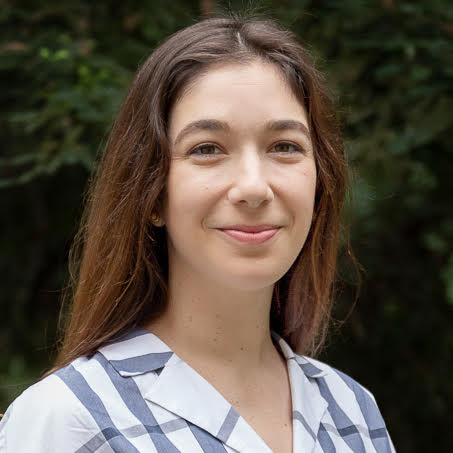
Why are species found where they are and not elsewhere? What makes them move? Research in the Fredston Lab focuses on the fundamental drivers of species’ ranges, and the causes and consequences of climate-related range shifts. This talk will cover evidence for temperature driving the biogeography and abundance of demersal fishes across spatial and temporal scales; a range of projects aimed at disentangling multiple drivers of species’ ranges, with various methods and taxa; and methods and theory for understanding species on the move.
Dr. Alexa Fredston
Dr. Brooke Weigel | Stanford University's Hopkins Marine Station
presenting: "The ecology of kelp forests in a changing ocean: physiology, microbiomes & carbon cycling"
Hosted by: Research Diving Program
MLML Seminar | May 14th, 2025 at 4pm (PDT)
Watch the Live Stream here or here
=
The ecology of kelp forests in a changing ocean: physiology, microbiomes & carbon cycling
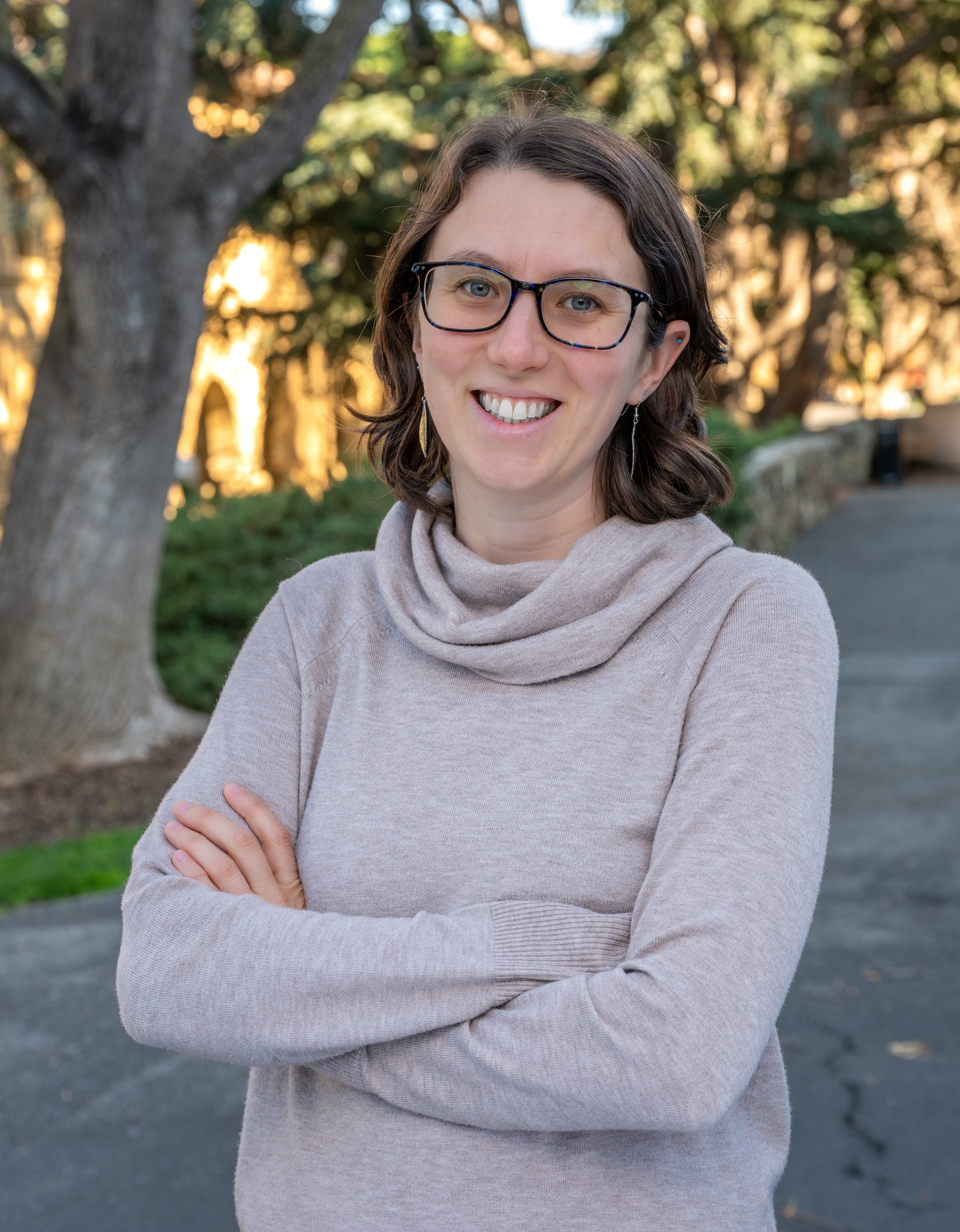
Climate change is threatening kelp forests, with 40-60% of kelp forests in decline globally. My research has identified critical temperature thresholds for growth, survival, and reproduction across the life cycle of bull kelp, Nereocystis luetkeana. Kelp blades harbor abundant and diverse microbial communities, which are also impacted by ocean warming. We will dive into the world of kelp microbiomes, looking at the factors that shape the assembly and composition, micron-scale spatial structure, and functional role of the kelp microbiome. Finally, kelp play an important role in the global carbon cycle by creating highly productive underwater forests that contribute to carbon sequestration – we will discuss key knowledge gaps in our understanding of carbon cycling in kelp forests.
Dr. Brooke Weigel
MLML Seminar | May 7th, 2025 at 4pm (PDT)
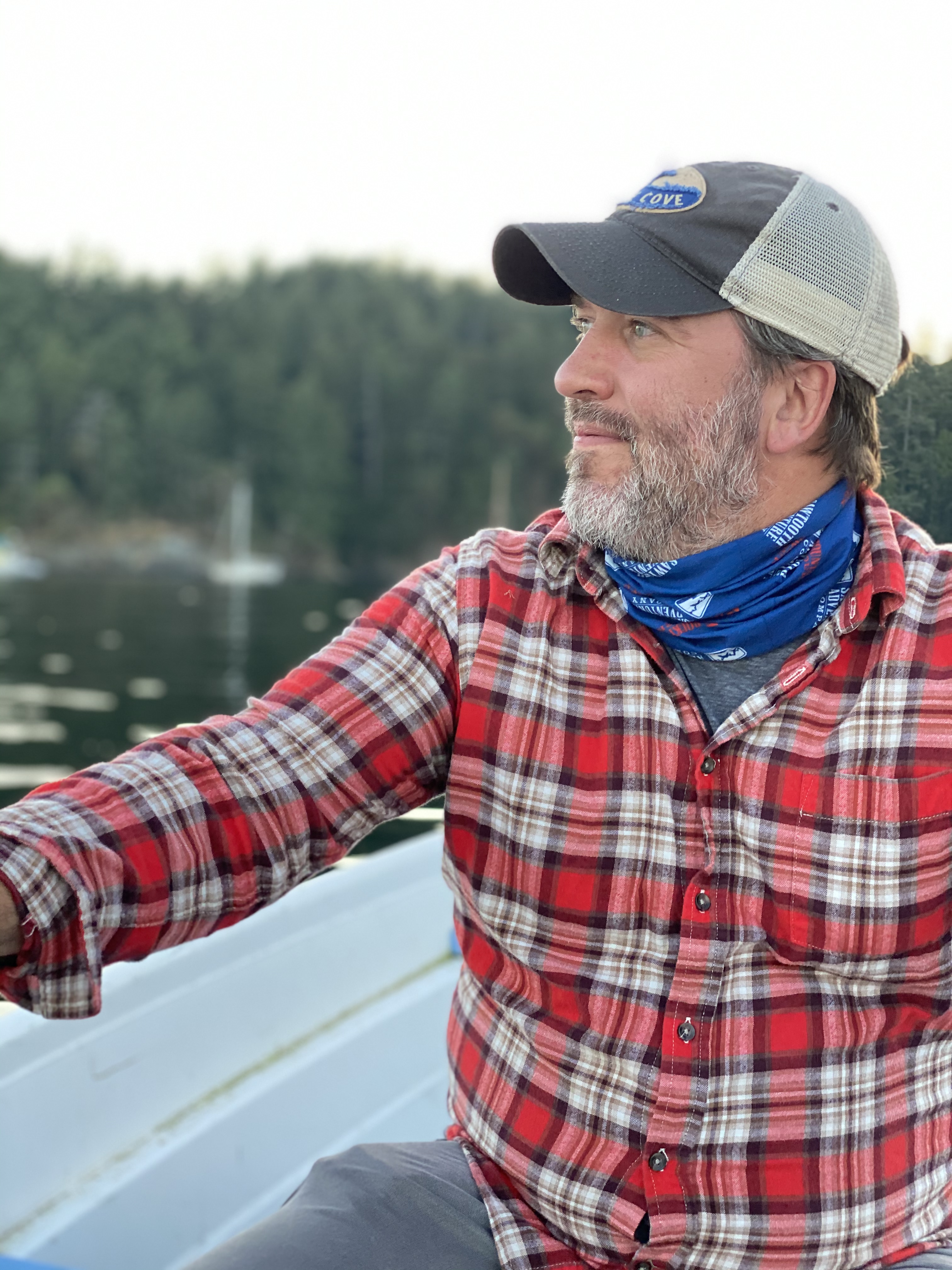
Dr. Paul Bourdeau
Dr. Paul Bourdeau is an Associate Professor of Marine Biology and Ecology at Cal Poly Humboldt, where he also serves as the Graduate Coordinator for the Department of Biological Sciences and the interim director of the Telonicher Marine Laboratory. A native of southeastern Massachusetts, Dr. Bourdeau earned his BS in Biology and MS in Marine Biology from the University of Massachusetts Dartmouth, followed by a PhD in Ecology and Evolution from Stony Brook University. He conducted postdoctoral research at Michigan State University before joining Humboldt in 2014. Dr. Bourdeau’s lab’s research focuses on how marine organisms respond to environmental changes, particularly those induced by human activities, such as the introduction of non-native species and climate change.
MLML Seminar | April 30th, 2025 at 4pm (PST)
Watch the Live Stream here or here
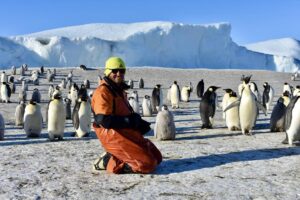
Modeling the habitat use of a fearless deep-diver, the Emperor Penguin in the Ross Sea
Emperor penguins undergo an energetically demanding annual molt, requiring them to remain on stable ice where they must fast until their feathers regrow. The foraging strategies following the post-molt period are critical, as individuals must replenish lost energy stores before the next reproductive fast. However, understanding habitat use during this period remains challenging due to the remoteness of the Eastern Ross Sea and the scarcity of available environmental data. To address this, we modeled the habitat use of post-molt emperor penguins using environmental variables from a mix of data sources. Our analysis aims to assess habitat selection and investigate whether the preferred foraging strategies differ between individuals. This study highlights how a mix of data sources can improve ecological modeling in data-scarce polar regions and help us understand the foraging behaviors of emperor penguins in response to environmental constraints.
Dr. Martin Tournier
Martin comes from France, where he completed two MS degrees in Oceanography and Marine Ecology, and Ecological Modelling. He got his Ph.D. from La Rochelle Université where his work focused on characterizing the habitat of deep-diving mammals. He worked with active acoustic data obtained from dataloggers that were deployed on southern elephant seals. He developed novel mathematical approaches to model the three-dimensional habitat of elephant seals.
While interested in many aspects of marine ecology, his primary research interest is to investigate the different diving and foraging strategies displayed by marine predators, both within and among species, with the goal of determining how environmental forcing will influence behavior on short and long-term scales. This knowledge will provide insights into how their 3-dimensional habitats are changing and how predators may respond to these changes. He is thrilled to address some of these questions with Emperor Penguins in the Vertebrate Ecology Lab. As a student, he helped to organize conferences, and he hopes to organize some short technical workshops during his time here. Outside of the lab, he enjoys spending time sailing, diving, cooking & baking, and hiking.
Finding Your Fit in the Dynamic Geoscience Workforce
The GROW career tool was developed in response to the often asked question: “What can I do with my geoscience degree other than become an academic?” This seminar will introduce the dynamic geoscience workforce with an overview of sectors and specific occupations suited to geoscience skills, while emphasizing the “braided river” model of STEM workforce development (Batchelor et al., 2021). In this updated model, a reimagining of the traditional pipeline, career paths adapt to the changing landscape and evolve to suit individual needs, values, and interests. Beyond presenting possible non-academic career paths, the seminar will provide tangible next steps and guidance for students to find their fit in the workforce by assessing their values, conducting informational interviews, strategically building their network, and marketing their transferable skills for different types of jobs.
Dr. Madison Wood
Dr. Madison Wood is a marine biogeochemist with a background in Quaternary paleoceanography and global carbon cycling. She holds a B.S. in Earth Science from the University of New Hampshire and a Ph.D. in Earth Science from the University of California, Santa Cruz. She is currently a 2025 Sea Grant Knauss Fellow working jointly with the National Oceanic and Atmospheric Administration and Department of Energy to coordinate interagency marine carbon dioxide removal policy.
During her PhD, Madison led a workforce development project aimed at helping students and early career geoscientists navigate the non-academic workforce. The product of this effort is the GROW career tool, which provides a one-stop shop for career resources and emphasizes a holistic, skills-focused approach to career development. Madison has shared this tool through workshops at AGU, GSA, and Goldschmidt conferences, and has presented to faculty and student groups including NSF GEOPATHS PIs, AGU/AGI Heads and Chairs webinars, and Mentoring 360 cohorts.