
Support Oceans in the Classroom – Add a Drop to Donor’s Choose

Erin Loury
Erin Loury

by Erin Loury Ichthyology Lab

Your $10 could solve science illiteracy!  OK, it would at least be a step in the right direction.   Why? Because $10 (and change) will pay for one subscription to Current Science magazine for Mrs. L’s class in Michigan.  “Breaking Science News” is the last project we need to fund to wrap up the Ocean Bloggers Ocean in the Classroom Initiative! The project only needs $177 more to bring exciting, current science to the hands of low-income students.   Your $10 may just seem like a drop in the bucket,  but the great thing about $10 is that you probably won’t miss it.   In fact, Dr. M at the Deep Sea News is so sure you can spare $10 that bad things will happen otherwise.
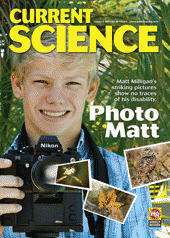
Current Science
Put fun science in the hands of kids! Donate today!

Still not convinced?  Well here’s my “Let me tell you why I gave $10” spiel.  I gave $10 to this project simply because I think communicating science is just as important as doing science itself.  We won’t be able to keep doing all the cool research we do if the population at large doesn’t understand why it’s important, or why they should care (or fund us).

Getting my hands on a similar type  of current events glossy when I was in 6th grade  was one of those world-expanding events that totally turned me on to learning.   Help make science tangible, relevant and fun for these kids in Michigan by showing them it’s part of their world!

OK, that’s my soap box.  Bottom line: even penny-pinching grad students can spare $10 for a worthy cause.   The Ocean Bloggers in The Classroom Initiative has been a smashing success so far, with 7 out of 8 great projects fully funded already (chest waders, coral reef flip-books, a salt water invert tank, and more)!  We are just $177 short.    So drop in and drop that $10, $20 or $200 today and make a difference!
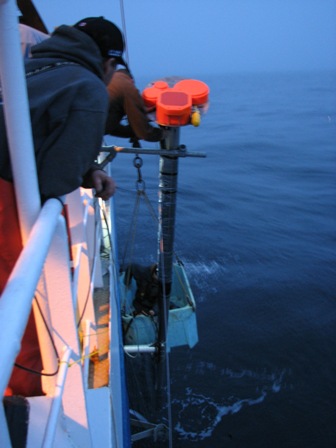
Into the storm

Photo: K. Benoit-Bird

…Our research cruise on the Gold Rush got off to a bumpy start.  We were delayed in leaving Dutch Harbor after working to attach the acoustic equipment, rig up our nets, and wire our electronic devices into the ship’s circuitry.  All this had to be done before hitting the seas to gather any data, but it was tough to know that the clock was ticking.

So, we were impatient when we heard that the ocean would be rough, and we decided to motor out anyway and get going on our course.  As it turned out, we probably should have stayed in port, gone for beers and a hotel room, and waited for the water to calm down; We did not collect much usable data during that first 72 hours anyway!

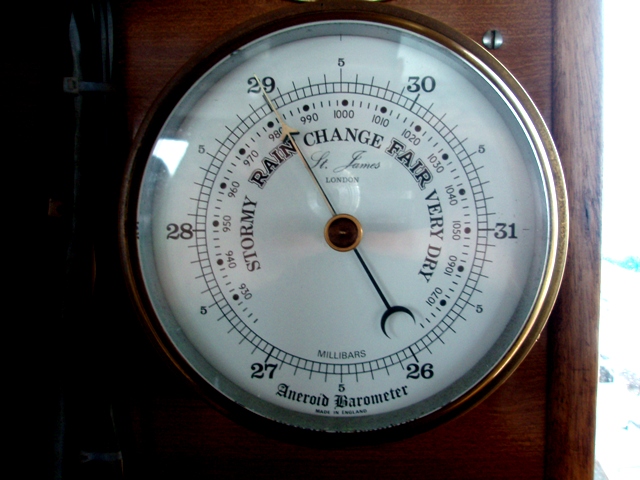
A good sign of our impending experience was the ship’s barometer.  Keep in mind that anything under 29.92 is considered, on average, a “low” pressure event, and is likely associated with stormy weather…

Photo: C. Waluk
Photo: C. Waluk

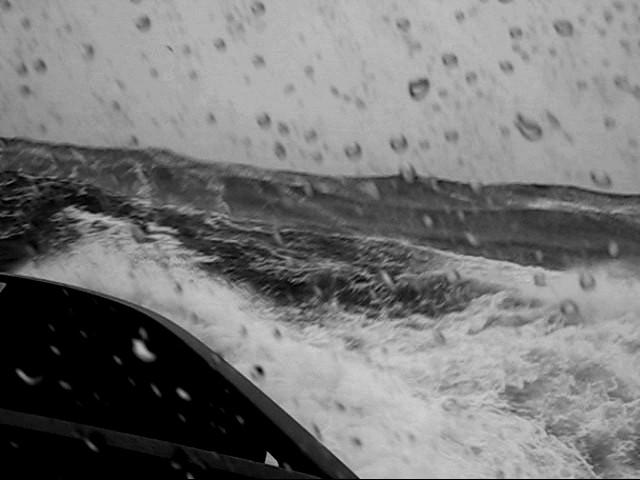
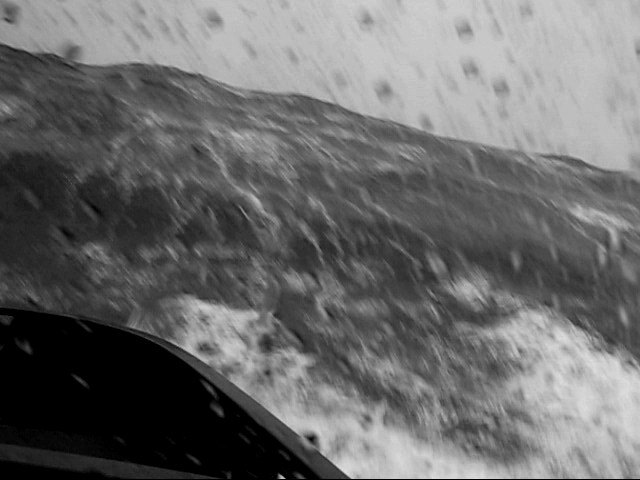
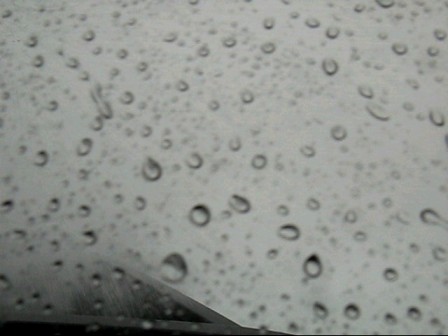
The waves and wind slammed us as soon as we rounded the last point of land and pushed into the open Bering Sea waters.  The ship pitched and plunged, leaving us weightless, even as we braced and grabbed with our hands.  Everything that was not bolted or strapped down began to slip, slide, and slam every which way.  The Gold Rush turned into the storm, facing torrents of spray and heaving mountains of slate gray water.

Photo: N. Jones
Photo: N. Jones

Up and up we would rise, pushing through choppy, liquid cornice crests, only to plunge steeply into dark troughs.

The height of the ship's rail is approx. 15' above waterline...

Even the captain, Bert Ashely, who has 30 years’ fishing experience in the Bering Sea, marveled at how unseasonably rough these waters were:  seas of perhaps 12-18’, and winds a sustained 40+ knots.

Photo: N. Jones
Photo: N. Jones
Photo: N. Jones
Photo: N. Jones
Blog entry: Nate Jones

And yet, it was the middle of summer…

This was how I spent my July 17th and 18th.

Spawn, Coral, Spawn!

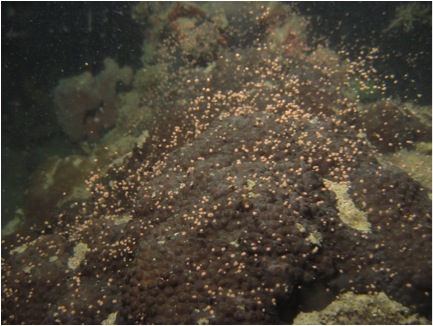
The coral Montastrea spawning. Orange bundles of sperm and eggs are released within a few minutes of each other all over the reef. (Photo: Edgardo Ochoa)
Shelby Boyer
Shelby Boyer

by Shelby Boyer, Invertebrate Zoology Lab

Timing is everything when it comes to coral spawning – spawning occurs once a year and is when corals synchronize the release of bundles of eggs and sperm into the water.   In one of my first  weeks in Panama, I was invited to help two coral researchers, Dr. Nancy Knowlton and Dr. Don Levitan, with an experiment on coral spawning.

Dr. Knowlton and Dr. Levitan have been studying a reef on the Caribbean side of Panama for eight years and have found that the colonies will spawn within minutes of the exact same time every year. By releasing their eggs and sperm at the same time, coral gametes have a good chance of coming in contact with one another for successful fertilization. Different species spawn at different times so that they have the best chance of only encountering eggs and sperm that they are compatible with.

To study this phenomenon, I went with a group of about 8 researchers, both professors and graduate students. We hopped on boats just before sunset and headed out to our field site at in island about a mile off of the coast of Panama. The spawning occurs at night so special preparations were necessary for us to dive in the dark and see them.  All of the divers had flashlights but these only help you see a short distance. Before dark we got in the water and set up a line of glowsticks underwater so that we would be able to orient ourselves in the dark. From the boat it looked like an underwater rave!

When the time drew near, we all donned our scuba gear and each went to a section of the reef where we watched for the spawning. For the first 20 minutes or so, we just waited…..and waited….and waited….

Soon, I started to notice some of the coral polyps getting swollen on top and some of the bundles showing through the mouth of the coral. This is called the setting phase. Within 5-10 minutes of setting, the colonies released all of their eggs at the same time in a big sheet. The little yellow bundles floated slowly to the surface where they would pop open to release the eggs and sperm in a big gamete soup! At the same time that the corals started to release the bundles, other activities started on the reef. Worms, seastars, fishes and other organisms appeared and took advantage of an easy, slowly floating meal. I even felt little nibbles on my hands (nothing painful or that broke the skin) from so many hungry predators in the water. The presence of all these predators could be another reason for synchronous spawning: if you put thousands of bundles in the water at the same time, there are just too many for predators to eat.

Shelby collecting corals in style!

It was a really exciting opportunity for me to accompany these researchers and I learned so much about coral spawning myself. I was able to make really positive connections with the professors and other graduate students that I will most likely see again as I continue my career as a coral researcher. Stay tuned over the next few months for updates on my own work.

Donors Choose – and we choose marine science!

Amanda Kahn
Amanda Kahn

by Amanda Kahn, Invertebrate Zoology and Molecular Ecology Lab

A major part of science is collaboration, because some projects require more effort, resources, or people than one lab can handle.  Collaborating allows us to tackle bigger projects and tasks than what would otherwise be possible.  The folks at Deep Sea News organized a collaboration with many other marine science blogs to sponsor support of K-12 marine science education.  Deep Sea News, the Drop-In, Southern Fried Science, Blogfish, Oyster’s Garter, Echinoblog, Cephalopodcast, The New Blue, The Right Blue, Natural Patriot, and Malaria, Bedbugs, Sealice, and Sunsets have all banded together to support Donors Choose, a website that allows teachers to ask donors to fund special projects for their classes.  We worked together and chose some of the marine science projects most in need, and now we’d like to collaborate with you to get those projects funded!  Check out the list of projects here: Ocean Bloggers Oceans in the Classroom Initiative.

Mrs S's class needs waders

Discovering a New Species of Ghost Shark

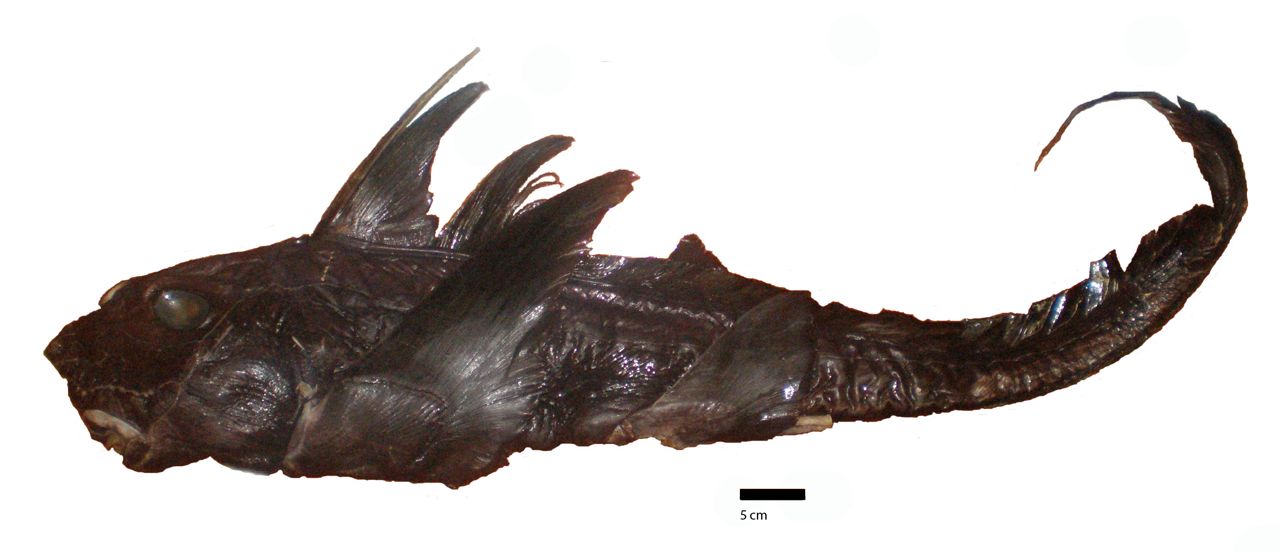
A new species of chimaera described by MLML student Kelsey James (photo by K. James)
The Eastern Pacific Black Ghost Shark: a new species of chimaera described by MLML student Kelsey James (photo by K. James)

by Erin Loury, Ichthyology Lab

Your mission, should you choose to accept it: describe a new species unknown to science.  That’s exactly the mission a few MLML students undertook last spring in a class on systematics.   Systematics is the study of how all living things on earth are related to each other through evolutionary relationships.  It involves figuring out how species are grouped together in these relationships, and identifying what makes species different from one another – a lot like a detective piecing clues together.

Ichthyology student Kelsey James recently cracked the case of of the Eastern Pacific black ghost shark.  This fish is a new species of chimaera, which is a cartilaginous fish related to sharks and rays.  Although scientists collected a specimen in Baja California in the 1970s and thought it was a new species, the fish languished in a jar for years waiting for someone to take the time to investigate it (a story all too sad and true for many new species out there).  After Kelsey’s close examination, she and other scientists decided it was indeed different from other chimaeras, and gave it the scientific name Hydrolagus melanophasma in a recent publication.

According to Kelsey, the process of describing a new species is actually fairly straight forward.  “First you have to look at everything closely related to it in the same genus, and then decide why it is or isn’t an already described species,” she said.  Sometimes it’s easy to see that a species looks different from others, but describing why it’s different in terms of body measurements (like fin size and spacing, jaw length, etc.) can be much harder to explain.  “The hardest part for me was describing a few good key characteristics that anyone could use to identify this species, which is called a diagnosis,” she said

[youtube=http://www.youtube.com/watch?v=jelQFJ0u7TA]

What made the project particularly exciting for Kelsey was that MBARI (the Monterey Bay Aquarium Research Institute) had ROV footage of her species swimming around at 1500 m in the Gulf of California (video above).  “It is spectacular to see this creature in action,” she said after watching their tapes.  “The differences between the preserved specimen, which I had been looking at for 2 months, and the live one were astounding.”

In addition to being published in the scientific journal Zootaxa, the story has created a lot of media buzz, garnering press time from the Smithsonian, Wired Science, National Geographic, and even a German website. Not bad for a class project!

Aboard the Point Sur – Combing the Depths of Monterey Bay

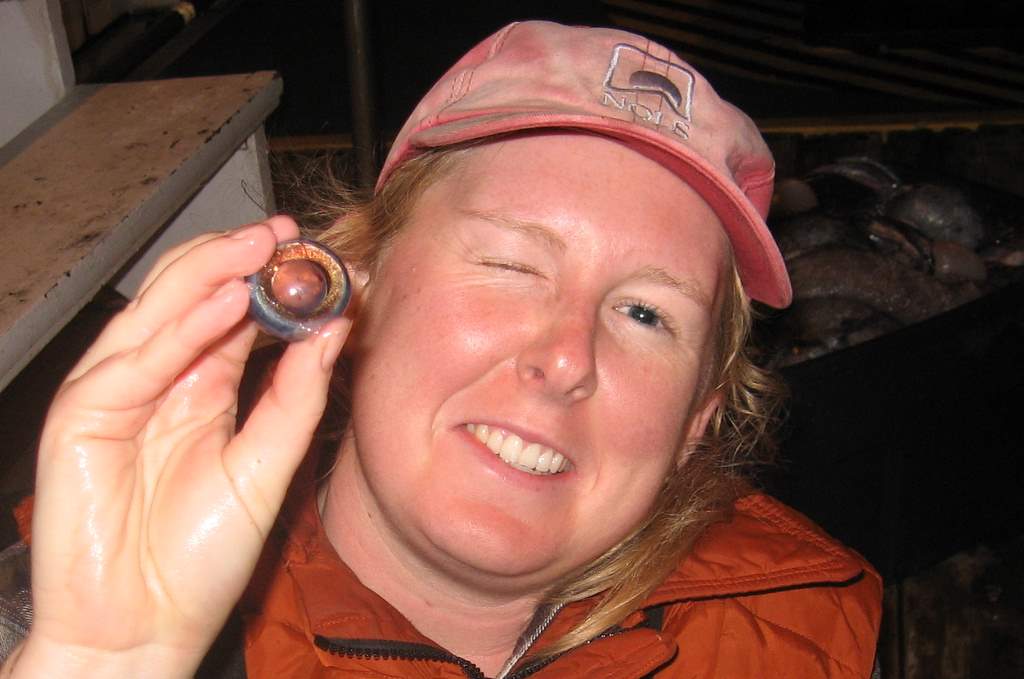
Need a spare?  Katie shows one of the eye-popping hazards of bringing fish from deep water to the surface (photo by Michelle Kay)
Need a spare? Katie shows one of the eye-popping hazards of bringing fish from deep water to the surface (photo by Michelle Kay)

Ichthyology student Katie Schmidt is currently aboard the Research Vessel Point Sur, helping a team of scientists study deep sea animals of Monterey Bay.  The team includes Dr. Jeff Drazen from the University of Hawaii, and Michelle Kay, a school teacher who is keeping a ship-board blog about life on a research cruise.   Check out her blog for great pictures of trawls full of deep-sea fish and invertebrates, as well as some cool underwater camera shots!

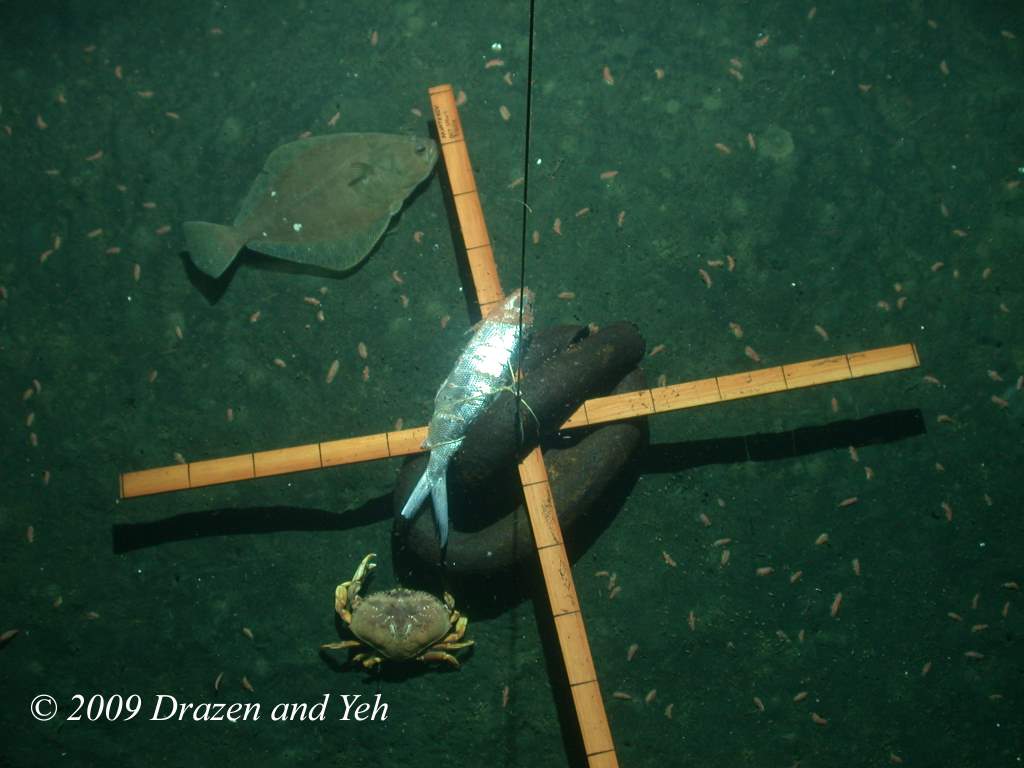
Deep-sea crabs and fish come to snack in view of the underwater camera (photo by Jeff Drazen)

Bumpy Bering Sea Summer

Don’t trust that twinkle in Jacques Cousteau’s eye!

Jacques Cousteau
Jacques Cousteau
Meyers_Palmyra2
Photo: Amanda M.

And, don’t be fooled by the idyllic photo that my friend Amanda M. took at her field site on Palmyra Atoll…

I’m here to remind everyone that Marine Science is not always bikinis, cocktails, warm sand, and sunsets.

(hmmm… should I have read the fine print before signing up?  Shelby, do you need a field assistant in Panama?).

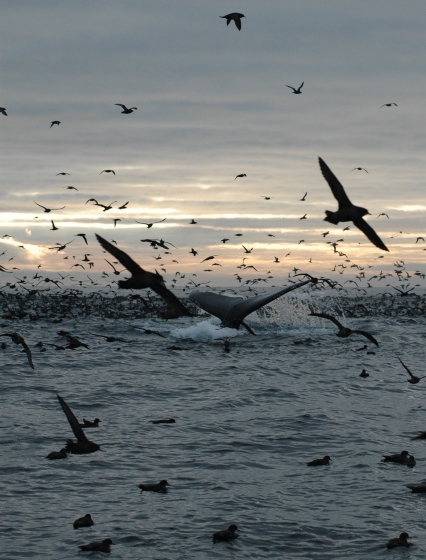
There is much to be studied in the cooler latitudes, and the abundance of marine birds and mammals truly defies description.

HUWH and Shearwaters_resized
Photo: NOAA / NMML

Perhaps the greatest challenge in working at high latitudes is the weather.  Specifically, what the weather can do to you while you’re working on the ocean!

Research time at sea is always an adventure, and usually it is a grand and engaging one at that.  But it can also be tiring, physically uncomfortable, and monotonous… or even a little too thrilling!  A friend of mine that sails frequently describes long ocean crossings as “days of boredom interrupted by moments of absolute terror”.

This summer I spent another 28 days out on the Bering Sea, studying the foraging ecology of seabirds and fur seals.  This was the second and final summer of data collection for my thesis work, which is funded as a component of the North Pacific Research Board’s Patch Dynamics Study http://bsierp.nprb.org/focal/patch.html.

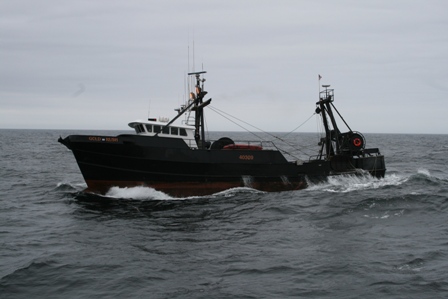
I spent my time on the contracted vessel R/V Gold Rush, which is a 99’ trawler that spends most every day of the year working in the Gulf of Alaska and Bering Seas.

IMG_2725
Photo: L. Whitman

As you might expect, this ship is sturdy, well-maintained, and operated by a very skilled and competent crew.  Nonetheless we did encounter some ocean conditions that slowed our progress and reminded us just how small we were…

Posted by:

Nate Jones
Nate Jones

Science in the Tropics – Positive Relationships of Panama’s Corals

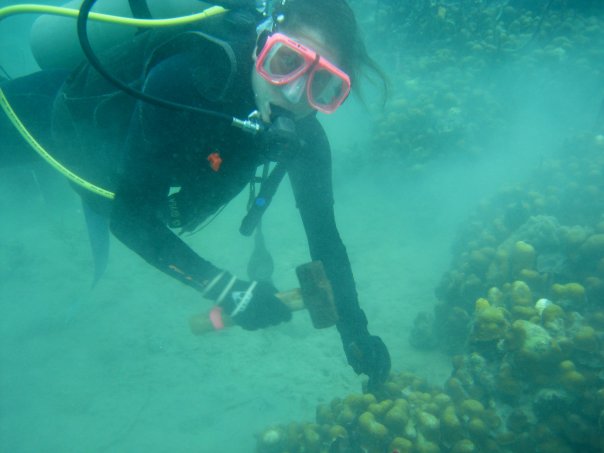
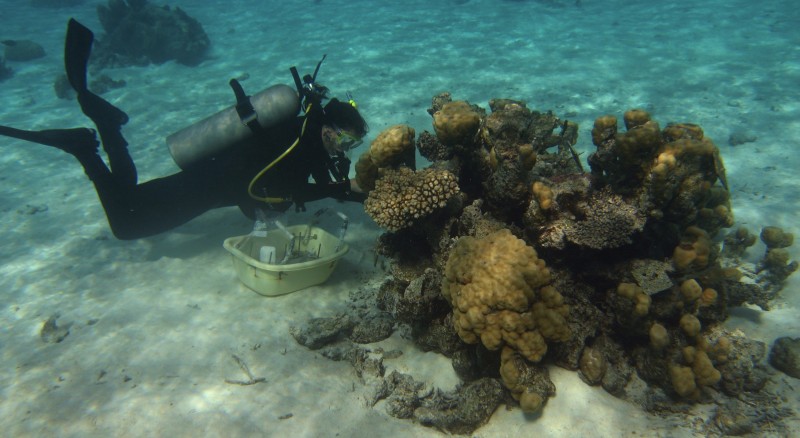
Getting up close with corals (and their symbionts) long enough to do research requires some SCUBA time.
Shelby Boyer
Shelby Boyer

by Shelby Boyer, Invertebrate Zoology Lab

Believe it or not, heading off to an exotic, remote field site is not uncommon for scientists. For me, this site is the Smithsonian Tropical Research Institute located on the Pacific Ocean side of Panama. I came all the way here to study corals and their interactions with endosymbiotic algae (zooxanthellae) that live inside of coral tissues. This relationship only occurs in warm, clear tropical waters near the equator.

Zooxanthellae, like all other algae, make energy from sunlight and pass some of that energy to the coral they live inside of. In return the zooxanthellae are provided with a place to live and some nutrients from the coral. When there is a positive benefit for both organisms, scientists call it a mutualism. I am just getting started on my research here and will be updating the blog as it gets going!

Follow Polar Explorers to the Antarctic

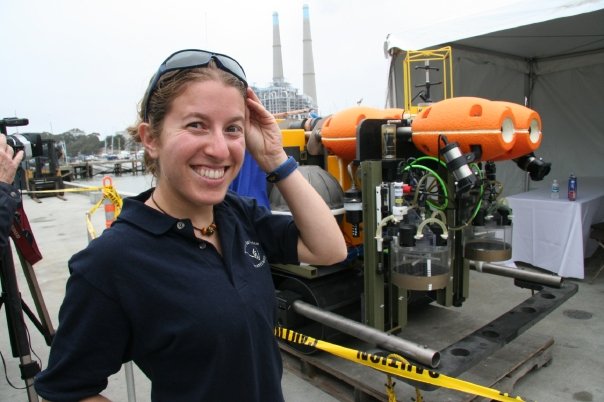
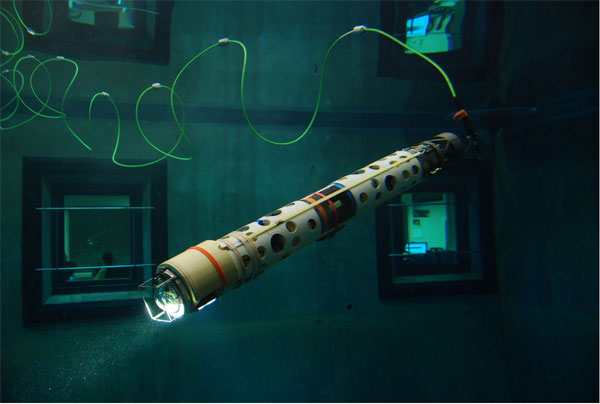
SCINI does a test dive at the Monterey Bay Aquarium Institute (MBARI).  (photo courtesy of the SCINI project)
SCINI does a test dive at the Monterey Bay Aquarium Institute (MBARI), shining a light from the camera dome on the left. (photo courtesy of the SCINI project)

MLML benthic ecology researchers are off to Antarctica again this fall for another field season with their robot SCINI, which serves as a scientist’s eyes in dark, freezing waters under the Antarctic ice (click here to get the skinny on this slender robot).   Despite their distant location, this will be far from a remote operation – the team will be logged in and connected to the “outside world” (that means you!) through a number of different channels.

You can follow their “Daily Slog” blog updates at the SCINI project website. MLML researcher Stacy Kim will also be a scientific correspondent for the Exploratorium Ice Stories project starting next week.    A PolarTREC teacher will also be blogging her experiences for the K-12 crowd.  You  can  send the team questions or sign up to participate in webinars through PolarTREC.  Get ready for an icy adventure from the comfort of your own home!

Summer at Sea: Early Riser

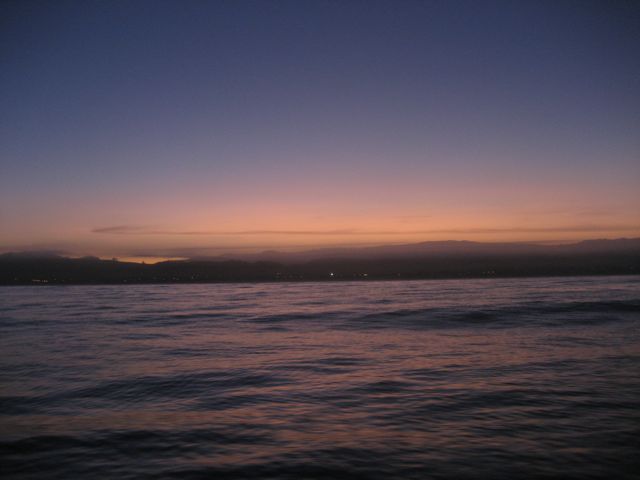
Leaving Half Moon Bay before the sun for a day of fishing with the California Collaborative Fisheries Research Program (photo: E. Loury)
Erin Loury
Erin Loury

By Erin Loury, Ichthyology Lab

If you’re not a good morning person, think carefully before considering any type of marine field work.  Whether it’s to catch a good low tide to sample an otherwise submerged tidepool, or to squeeze in as much fishing time on the water before the afternoon wind, it’s not unusual to start a summer morning of field work at 4 a.m.  I definitely gain a new respect for weather and tides when operating on nature’s schedule – and maybe lose a bit in the beauty sleep department.
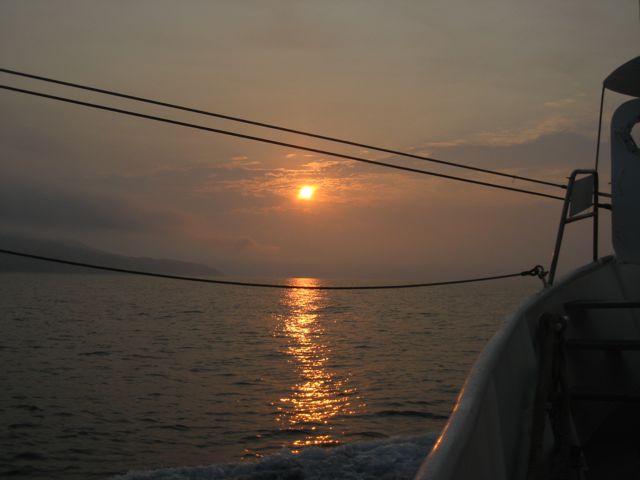
There are other consequences: I start thinking about lunch around 9:30 a.m., and bed starts sounding awfully good at 8 p.m.   Although I often wish I had a crowbar to pry open my eyelids that early in the morning, the pre-dawn start can have its benefits too.  Such as watching the sunrise light up the ocean.   Suddenly, the field work I was cursing not two hours before becomes the luckiest job the world – and I remember just why I wanted to do marine science in the first place.

Sunrise at the Channel Islands on a National Marine Fisheries survey (photo: Erin Loury)