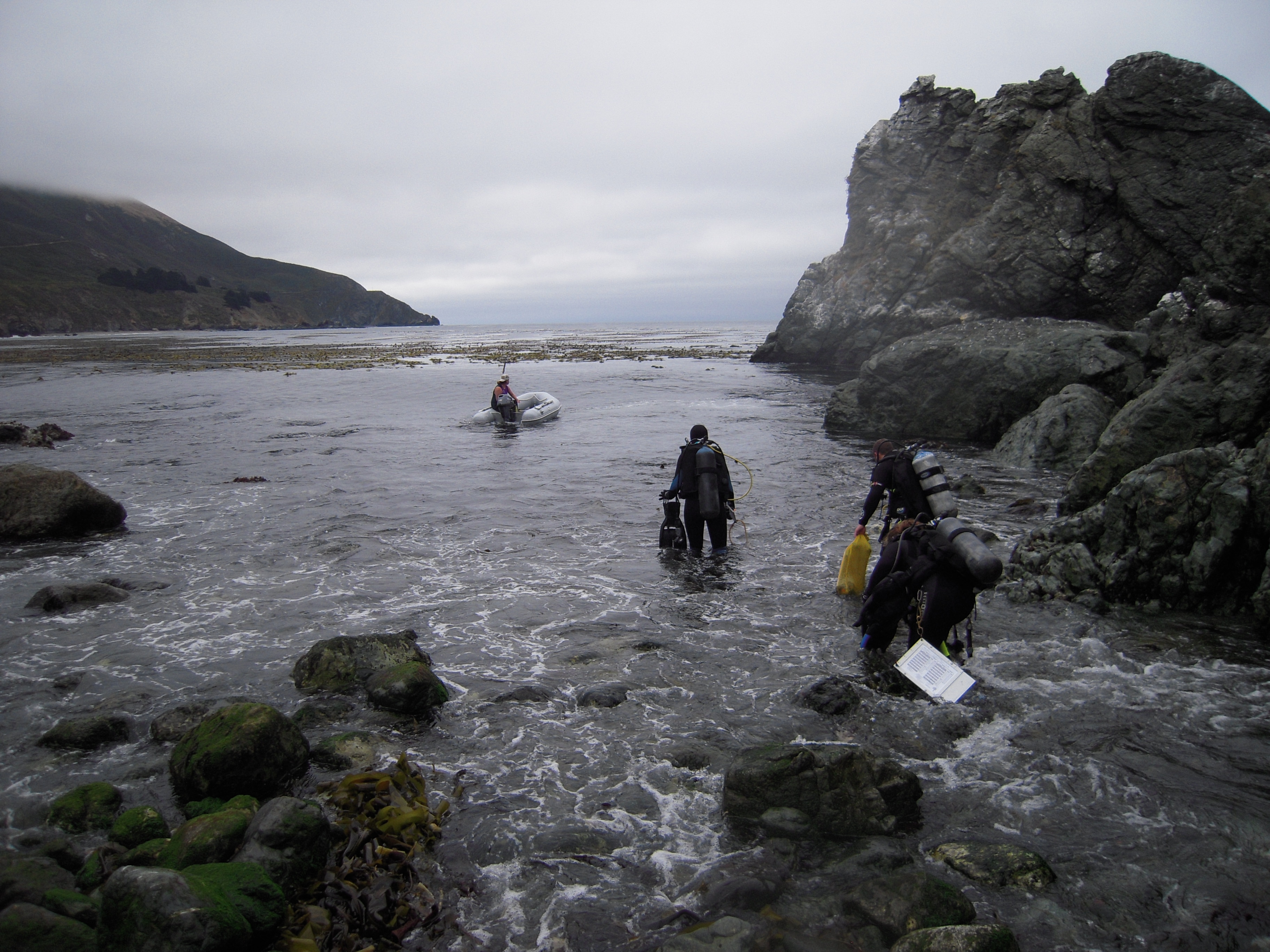
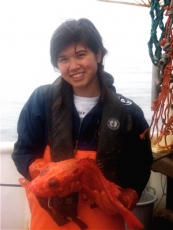
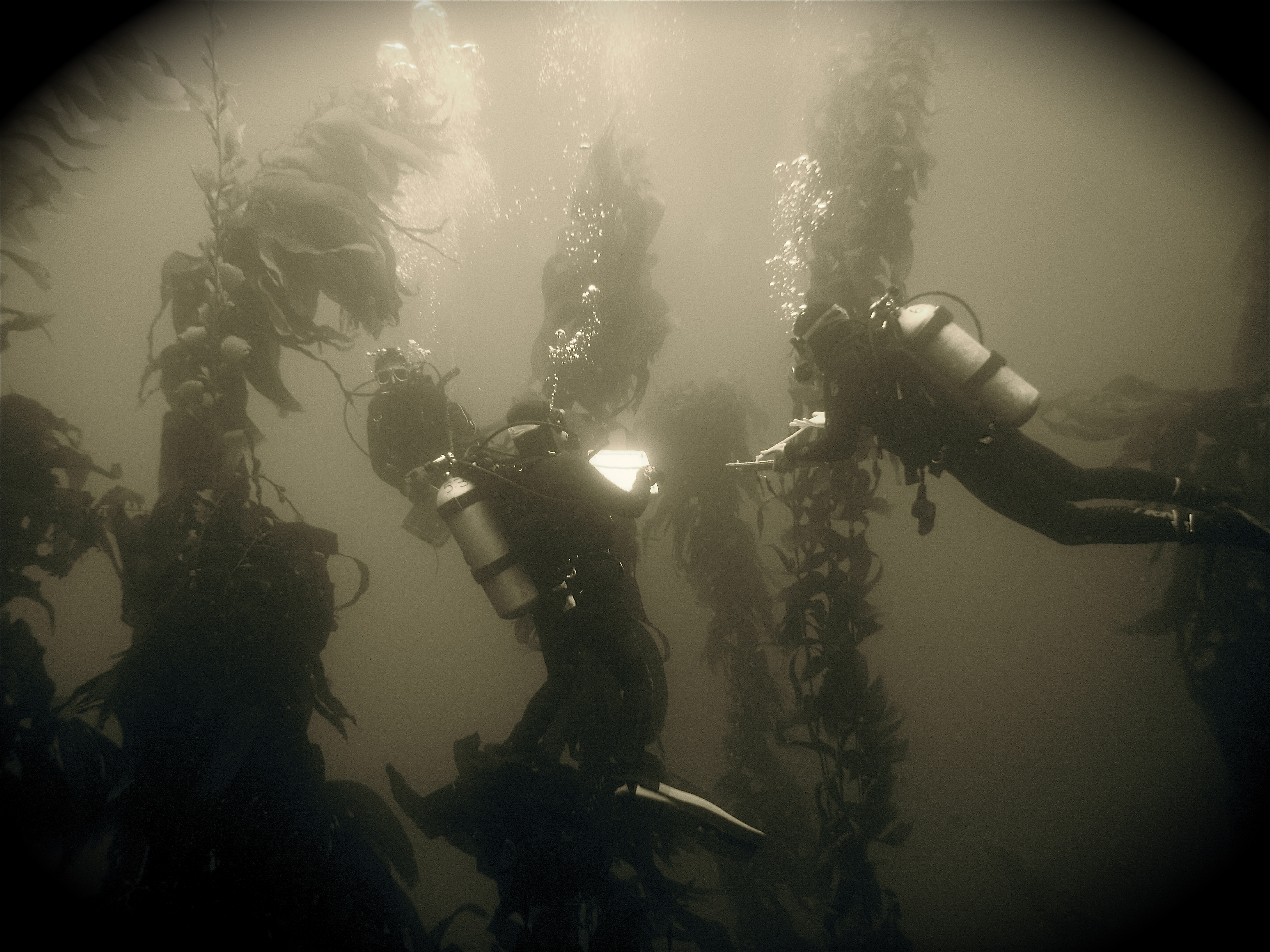
Brynn and other divers head out for a Reef Check survey dive at Big Creek Reserve during the 2010 MLML Marine Science Diving class Brynn Hooton-Kaufman
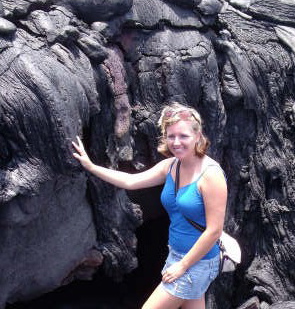
I think it’s about time that I tell you about my adventures at Moss Landing Marine Labs. I’m deep into my third year of grad school here, and I have yet to write a blog. Well, things are about to change. I want to share with you what it’s like to SCUBA dive in the Monterey Bay Aquarium, chase down an invasive seaweed in the harbor, and hike through ink-black caves for class.
Lots of experiences got me excited about science and ecology, and helped prepare me for graduate school. You can read about the path I took to get to graduate school and all of its amazing opportunities in my student profile. There I share my experiences working for the California Department of Fish and Game, and as a lab tech in the Wetland Ecology Lab at UC Davis.
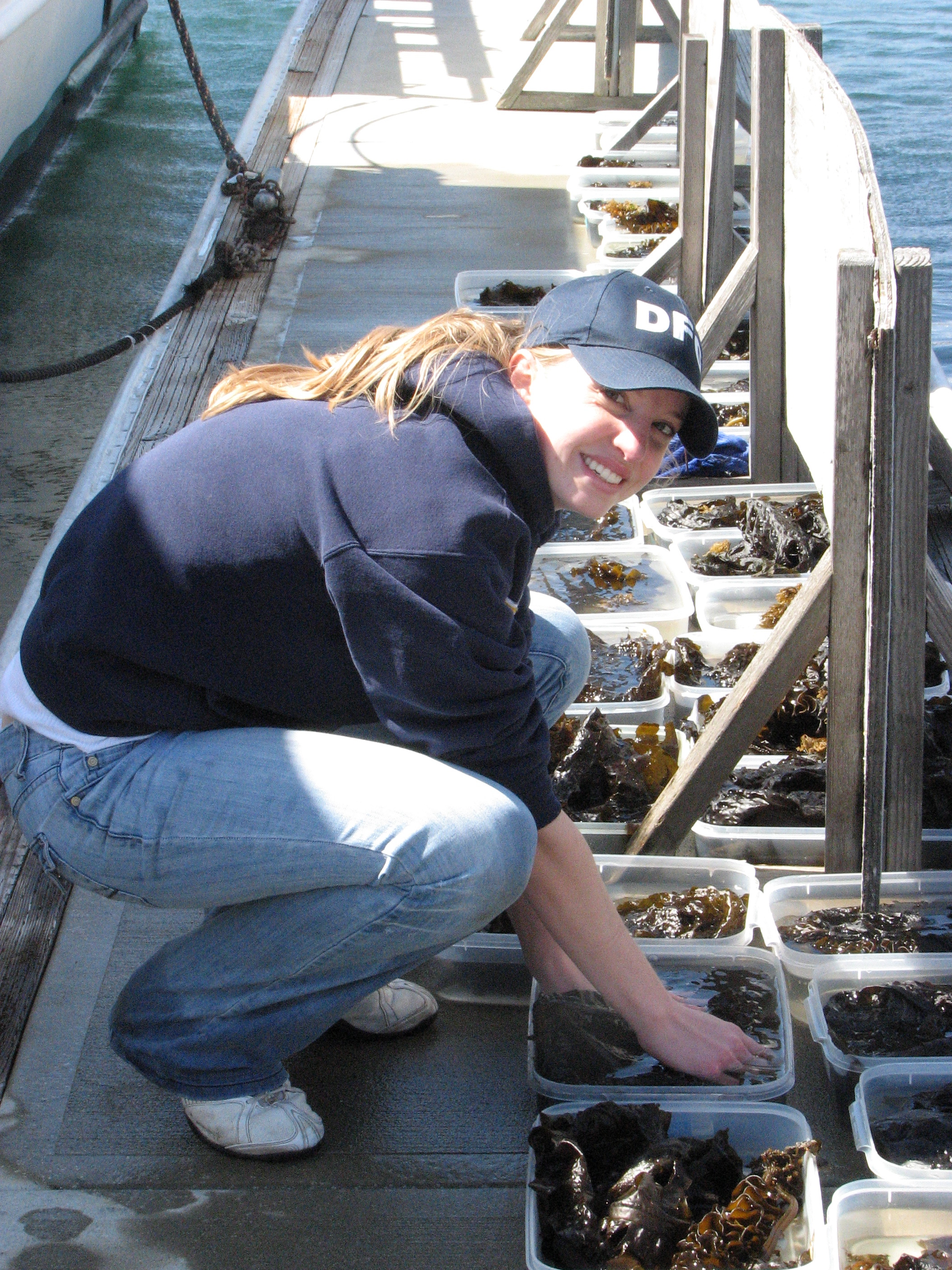
Brynn sorting through samples of Undaria, fishes, and invertebrates in Monterey Harbor
You might be wondering why I’m chasing down an invasive seaweed in the harbor. For my thesis I am investigating how native fishes and other organisms use the invasive Asian kelp Undaria pinnatifida for habitat in central California. In my profile I explain why this topic is important to me, and in future posts I will tell you all about what it’s like to dive in Monterey Harbor to collect Undaria and other critters.
That’s all for now, but check back often for new posts, and thanks for letting me share my adventures with you!
Put your tentacles up – it’s Cephalopod Awareness Days 2010, everyone! Fellow marine scientist blogger Danna Staff (a cephalopod enthusiast and newly-minted Ph.D. from Hopkins Marine Station) is hosting this week’s festivities at her Cephalopodiatrist blog. I figured it would be fitting to celebrate October 8th, Octopus Day, MLML-style with a tale of two Erins and their eight-armed encounters.
The first is a repost about Erin Jensen’s octopuses. Erin defended her thesis in April, titled “The Effects of Environmental Enrichment and Problem-Solving on the Brain and Behavior of Octopus rubescens.” While she spent most of her time stumping octopuses with mazes and food puzzles, and subsequently dissecting their brains, she also moonlighted in octopus husbandry – or at least, attempted to. When one of her octopus test subjects wiggled its way out usefulness in her experiment by promptly laying eggs, Erin realized there was little she could do but enjoy just how goshdarn cute they were. While none of the babies survived past a few days, we did get some video of them doing their bouncy thing – check out the full post here.
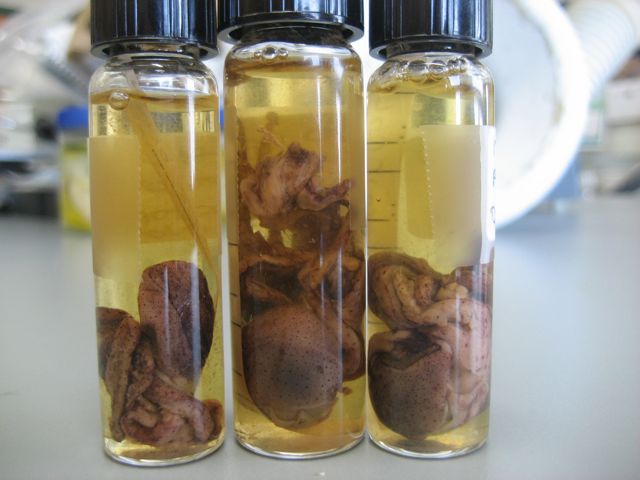
And then there’s me, the second Erin. We in the fish community can appreciate cephalopods as much as anyone. Even fish love cephalopods – they make great snacks! Here’s a photo straight from the gopher rockfish gut files, aka my thesis on gopher rockfish diet. Though true octopus lovers may shed a tear at this assortment of consumed critters, consider that an animal’s ecological role is also worthy of celebration. So here’s to a tasty link in the food chain!
Delicious and nutritious: little octopods from the guts of gopher rockfish. (photo: E. Loury)
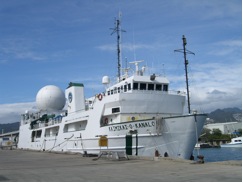
In April of this year I flew off to sunny, warm Hawaii to participate in a research cruise for my former school, the University of Hawaii, Manoa. As the plane took off from San Jose in a cold morning rain I had little idea of what to expect, science wise. On my arrival in sunny Hawaii I quickly learned that the cruise was funded by the US Air Force, (and specifically an agency called DARPA) to observe a glider do something where no one else could see it. The details were vague, to the point that until the evening after we’d left port none of the ships crew, nor myself knew where we were exactly going or what DARPA stood for. We took to referring to it as the ‘Department of Defense Against the Dark Arts’, and the giant satellite tracking antennae on our deck as the ‘death star’.
My home for 16 days: the RV Kaimikai o Kanaloa, docked before the cruise at the University of Hawaii marine center. (photo: S. Buckley)
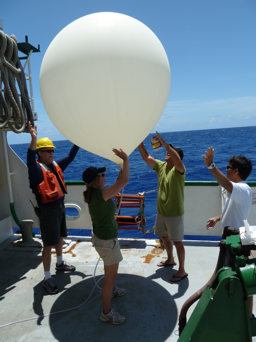
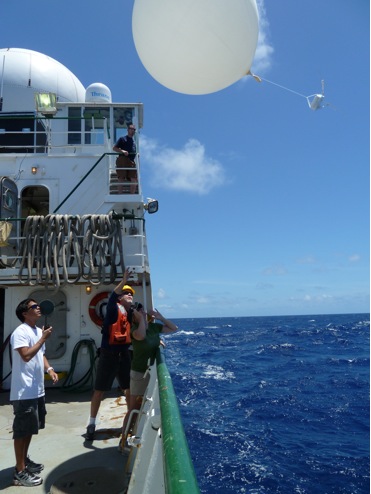
Silly names aside, my job aboard the ship was to collect atmospheric data using weather balloons. Before leaving land I was trained by the UHM meteorology department to launch weather balloons and convince the attached instrument to listen to me. The instrument, all going well, would profile the atmospheric density (pressure, temperature, humidity) to over 30,000 meters. Once on station, 1,000 nautical miles west of Hawaii, I would launch a balloon every 6 hours and take meteorology readings at the surface. On land I was referred to as the balloon technician.
Releasing the weather balloon from the ship. Making pushing motions and yelling “Fly, fly!” was found to help. (photo: S. Buckley)
The title of “Chief Scientist” was bestowed on me jokingly one night at dinner and stuck through the entire cruise. The reasons for such a prestigious title were two-fold. First of all, I was the only person on board associated with a research institute who was there to collect research data. The rest of the science party consisted of 4 very intelligent technicians contracted or hired by the Air Force whose job on board was to collect satellite data transmitted from the glider. Second of all, as the only woman on board, I was given the Chief Scientist cabin. And that is how a first year graduate student becomes Chief Scientist.
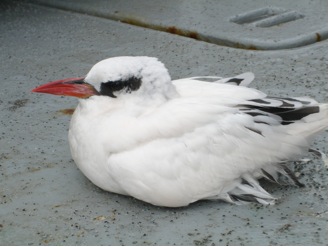
Birds would fly onto the back deck of the ship at night and hang out for a day. (photo: S. Buckley)
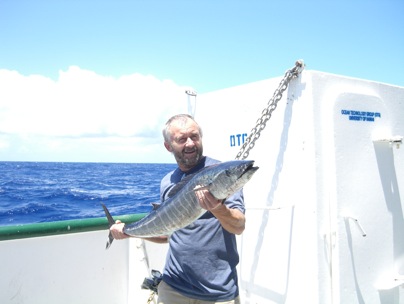
Being at sea for 16 days, literally 1,000 nautical miles from “civilization,” on a 200-ft ship with 20 men is an interesting and very educational experience. The other people on board had a lot to teach me. The lead technician led me through the basics of communicating between the scientists and the bridge in the middle of the night, and how to launch a large unwieldy object without following it over the side of the ship. Every morning I would go up to the bridge and the Captain would patiently guide me through a sun sight with the sextant. By the end of the trip the GPS and I were mostly in agreement. Being out at sea was an incredible experience and one I would recommend to anyone with an interest in packing as much learning and action into as little time and space possible. The stars were gorgeous, the people were interesting, and the food was great.
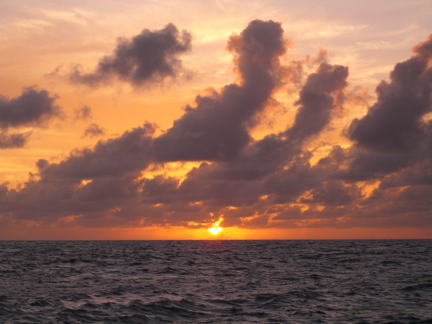
The chief steward and the dinner. (photo: S. Buckley)We saw lots of beautiful sunsets like this one. Best movie on the ship.. (photo: S. Buckley)
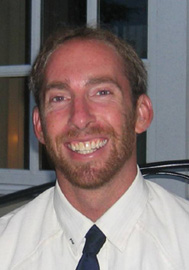
Dr. Scott Hamilton will be joining the Moss Landing Marine Labs faculty in Spring 2011 as the new Ichthyologist. Currently a postdoctoral researcher at the University of California Santa Barbara, Scott has participated in a variety of exciting research projects. He gave us a chance to ask a few questions about his current work, and his future plans. Keep reading to find out what we learned. (Interview by Brynn Hooton).
Q: Scott, how did you get your start as an ichthyologist?
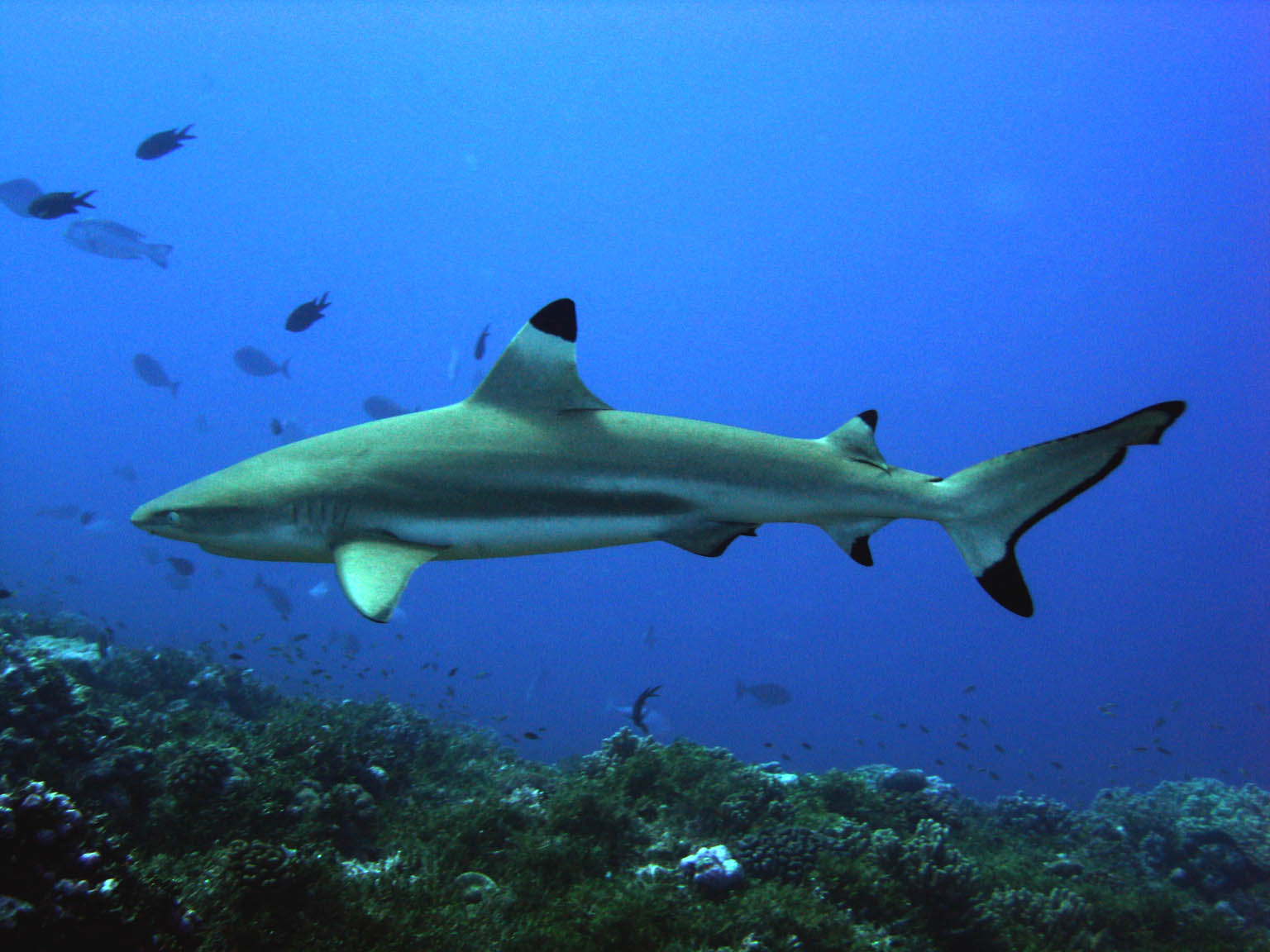
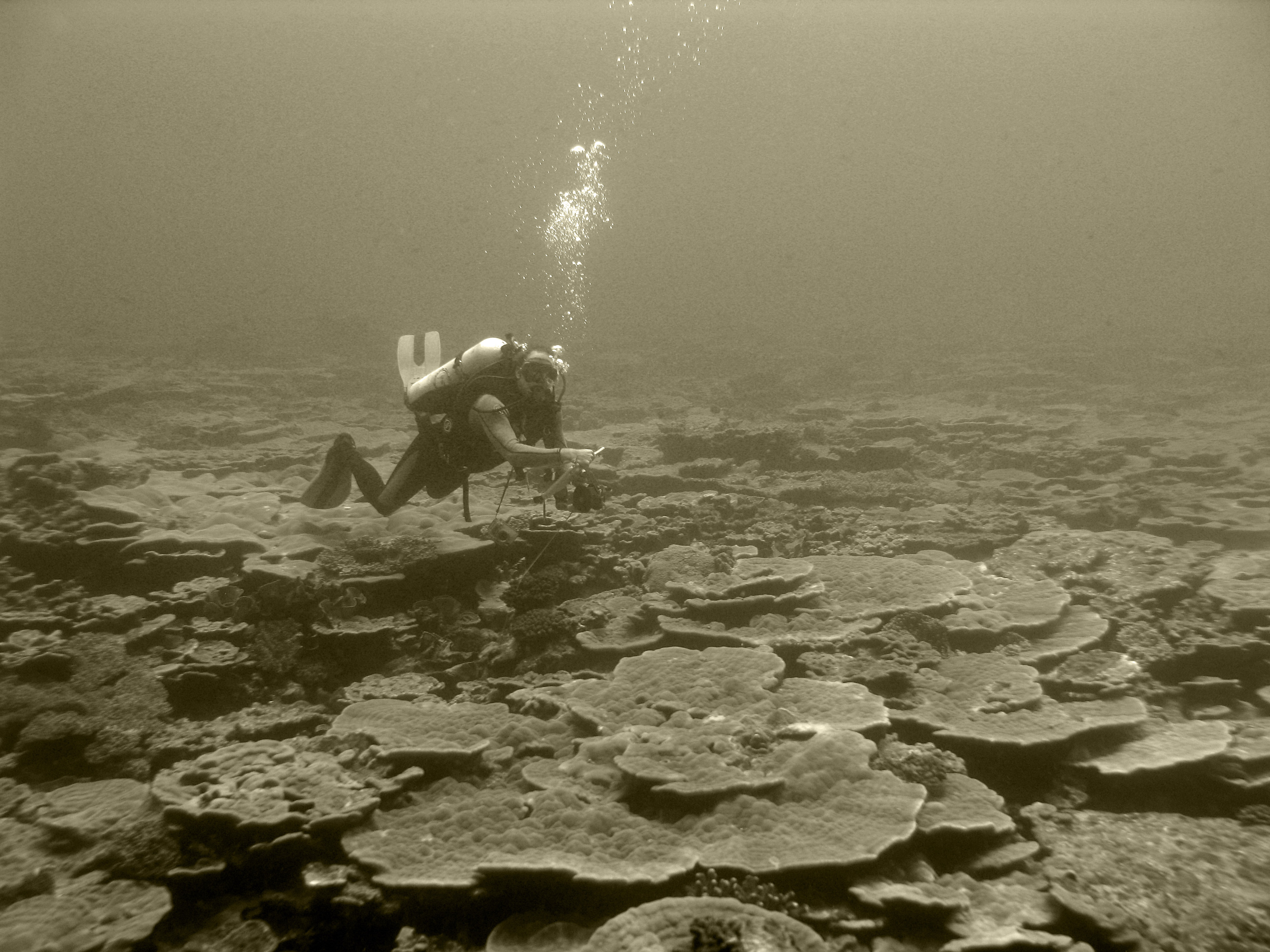
A: My interest in the world of ichthyology began when I was kid and tried to read every book I could find about sharks. However, my first research project started during college. Through a tropical field studies program in Panama, we examined the ability of large roving parrotfish schools (important grazers on coral reefs) to circumvent the defenses of territorial damselfish and gain access to their algal gardens.
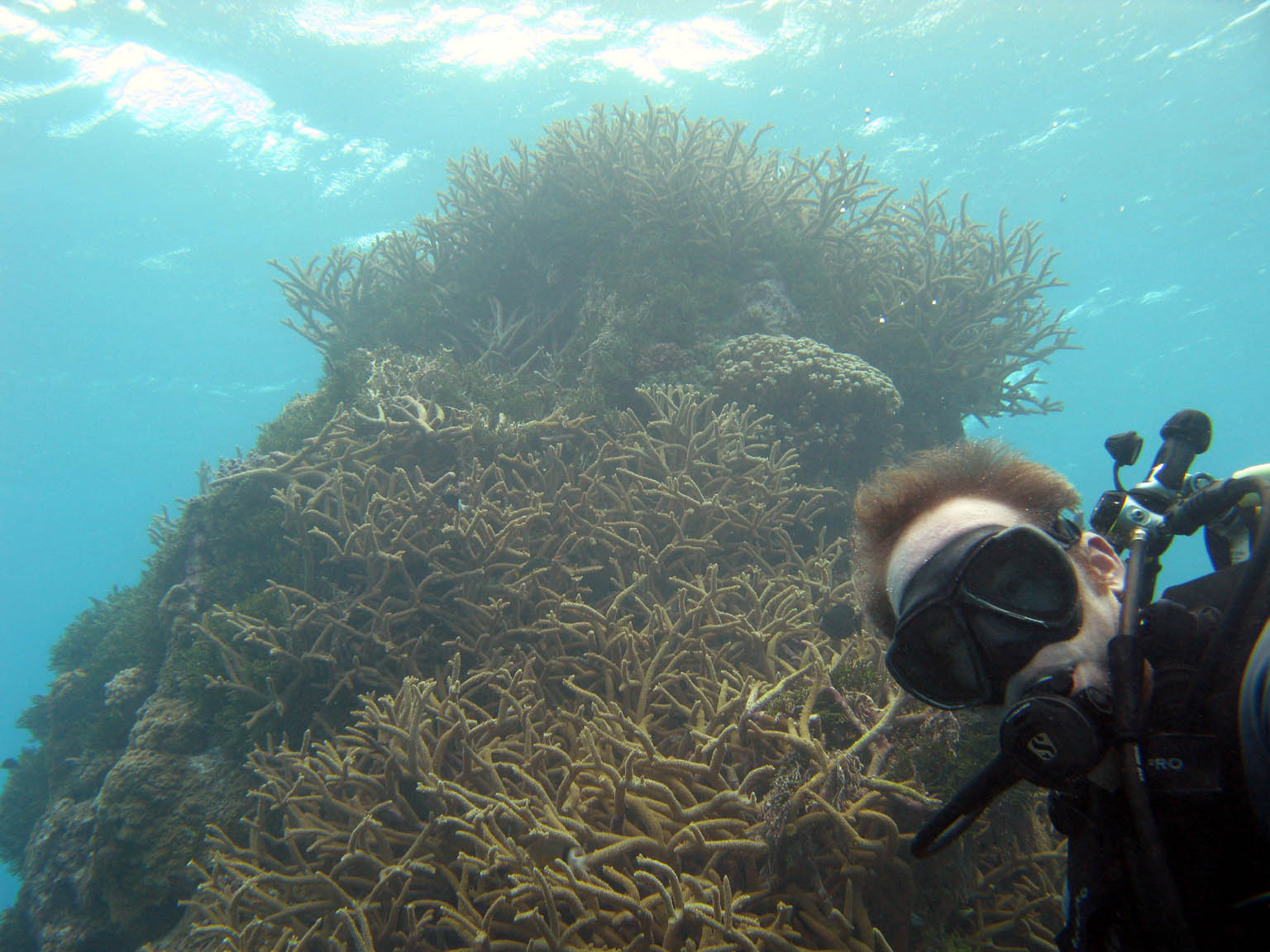
Scott's first fish love was all things shark, like this Blacktip reef shark at the Palmyra atoll. (photo: S. Hamilton)His first research involved studying coral reef fishes. (photo: S. Hamilton)
Q: What is the one thing about MLML that you are most looking forward to?
A: At Moss Landing I am most looking forward to working closely with students to develop exciting research projects that will get us diving in the beautiful kelp forests around Monterey Bay
Scott is looking forward to continuing kelp forest research here in Monterey Bay. (photo: Scott Hamilton)
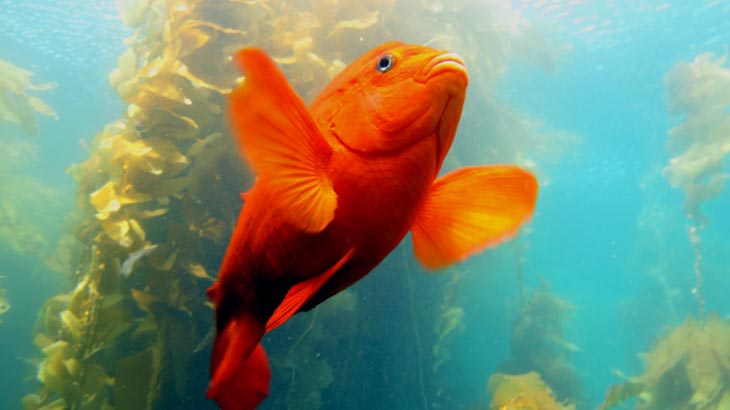
A colorful garibaldi in the kelp forests of Catalina Island. (photo: Scott Hamilton)
Q: Anything new with your research that you would like to share?
A: We just started a new research project examining differences in reproductive behaviors and mating success of California sheephead inside and outside of marine reserves at Catalina Island. Unfortunately, this summer the waters have been unseasonably cold due to strong La Nina conditions and the fish were not courting or mating at any of our sites. So, we shifted gears and instead conducted experiments to examine size-selective foraging of sheephead on sea urchins and differences in predation rates inside and outside of reserves. There was a strong lesson here that sometimes there are factors outside of your control that affect research. We also overlapped on this trip with Diana Stellar and a number of students from Moss Landing, which provided for endless good times.
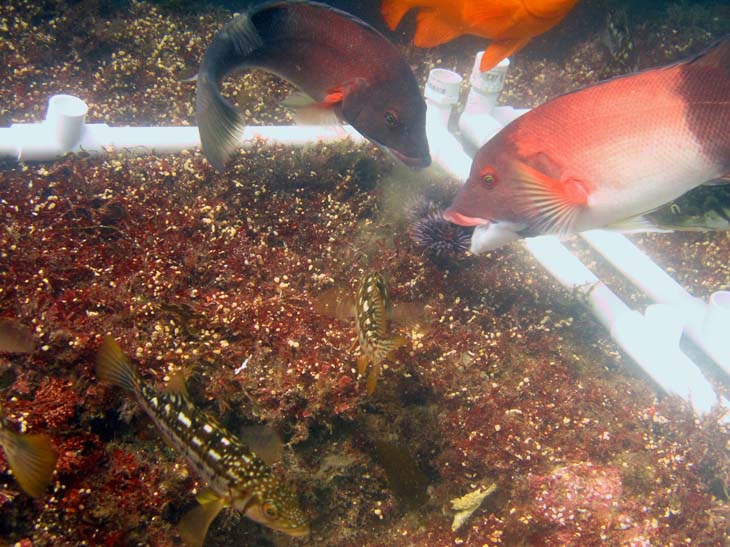
California Sheephead feed on urchins during a predation experiment. (photo: Scott Hamilton)
Q: When do you plan to relocate?
A: My wife and I are hoping to move to Monterey sometime around December and look forward to becoming integrated in the Moss Landing community.
That’s all from Scott for now, but check back during the spring semester to find out about all of the new adventures he’s having at Moss Landing Marine Labs.
Welcome to the MLML family, Scott! We're looking forward to hainvg you join us. (photo: S. Hamilton)
Edem Mahu from Ghana will be studying contaminents in marine sediments at MLML this year. Brynn Hooton-Kaufman
by Brynn Hooton, Phycology Lab
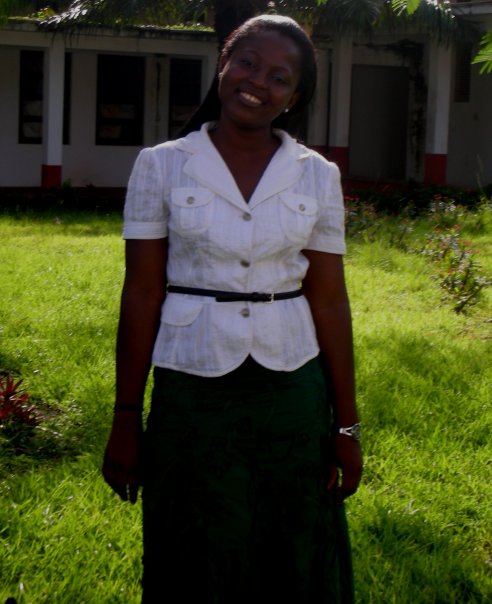
Edem Mahu, exchange student from Ghana.
This year, Moss Landing Marine Labs will be hosting Edem Mahu, an exchange student from the University of Ghana. I got a chance to sit down and talk with Edem, and learn a little bit about her background and her experiences at MLML so far.
Edem is a graduate student at the University of Ghana in the Department of Oceanography and Fisheries. She told me that she has completed all of her coursework at the University of Ghana, and has come to Moss Landing Marine Labs to develop and complete her thesis. Edem came to MLML through the International Student Exchange Program, better known as ISEP. I asked her how, out of all of the universities in the world, she ended up choosing Moss Landing Marine Labs for her year abroad. She explained that you can apply to a list of schools that ISEP provides, and in her search for a marine science program, she came across San Jose State University. San Jose State’s marine science program is housed here at Moss Landing Marine Labs, and after learning about the labs on our website, she decided that it was a good fit.
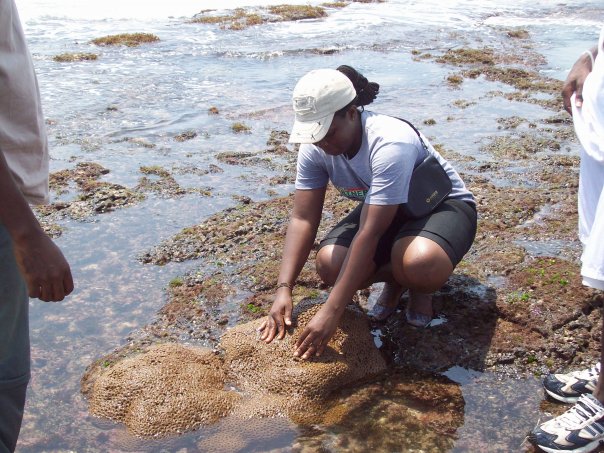
Edem's field class in Ghana.
Edem will be working with MLML’s own director, Dr. Kenneth Coale. With Kenneth, Edem has developed a thesis working on the assessment of benthic assemblages and levels of chemical contaminants in marine sediments. I asked how she became interested in studying this particular subject. Edem answered that in the Gulf of Guinea, oil drilling is common. However, baseline data on petroleum hydrocarbons and other contaminants in marine sediments is sparse. In the event of an oil spill, such as the one in the Gulf of Mexico right now, baseline data would be invaluable to scientists trying to protect or restore the marine ecosystem.
So far, Edem said she is enjoying her experience at Moss Landing Marine Labs. She said everyone has been very open, helpful and friendly. I’ll look forward to hearing more about her adventures here in the future. Check back often for more updates!
Get to bed early tonight because Sunday morning at 8:00, MLML student Amanda Kahn will be interviewed on Scuba Talk Now, Pirate’s Radio! The interview will air on KNRY AM 1240, and will feature questions about some of the things that Amanda has learned about for her research. Come find out what it’s like doing deep-sea research, what is so great about scientific diving, and learn a ton about the animals that Amanda studies: marine sponges! Check out the posts below for some background info, then listen in and be ready to ask more questions!
by Amanda Kahn, Invertebrate Zoology and Molecular Ecology Lab
In April, MLML opened its doors to the public and we spent the weekend showcasing our research and teaching people about marine science. We did this in a variety of ways: lectures, seminars, interactive exhibits, touch tanks, science as art, and even in puppet form! For those of you who missed the show, you can still learn about Dora the Sperm Whale’s exploration of the deep sea, discover different deep-sea habitats, and find out all about the many ways that animals eat! Check out the two-part video below, and be sure to catch our hit songs “Chemoautotrophy” and “Vertical Migration”!
Part 1:
[youtube=http://www.youtube.com/watch?v=-pUD0C5xMgQ&hl=en_US&fs=1]
Part 2:
[youtube=http://www.youtube.com/watch?v=pG689-SsD40&hl=en_US&fs=1]
Got any questions about the animals or habitats you saw in the show? Comment below or email and we’ll tell you all about them!
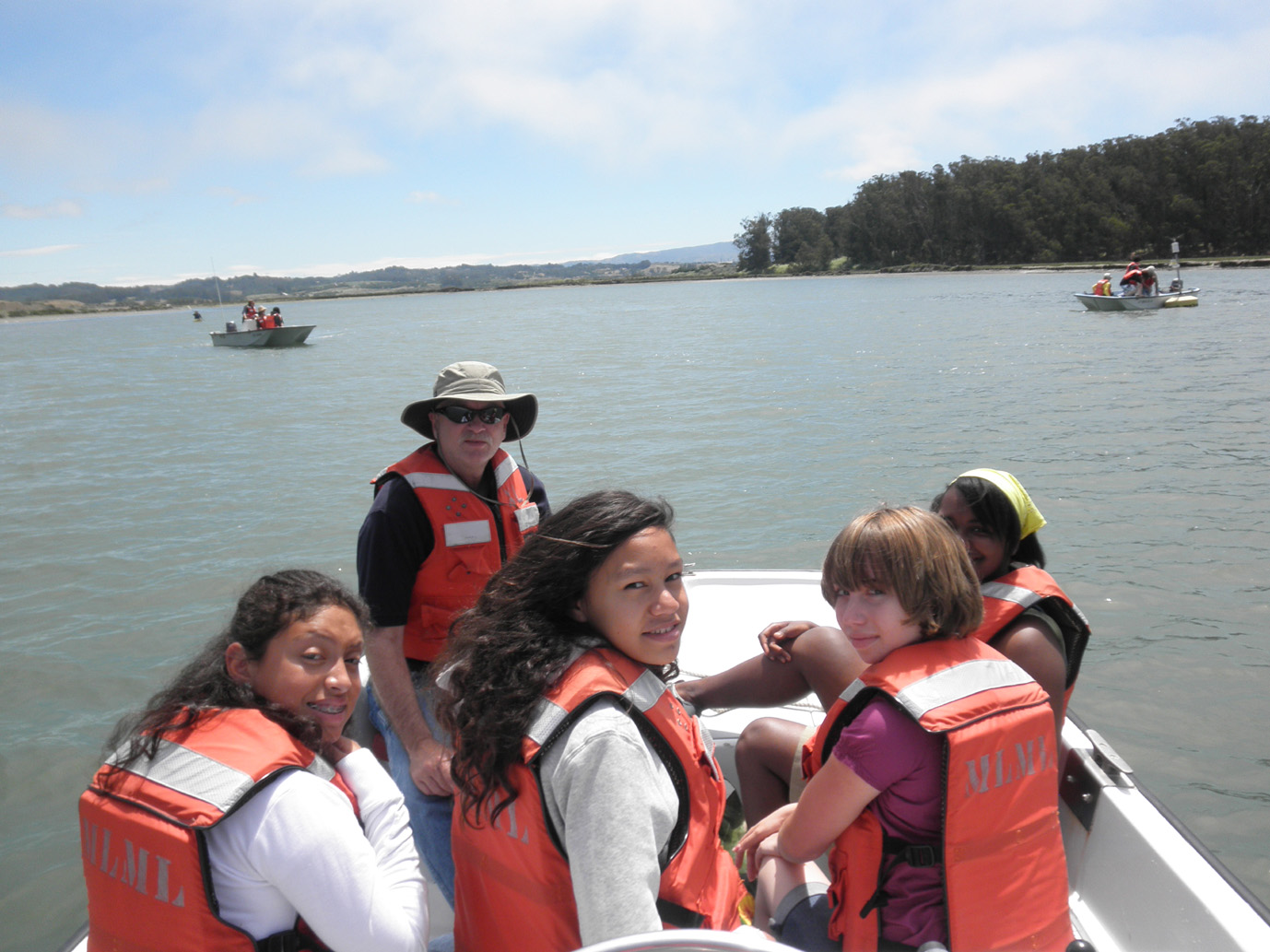
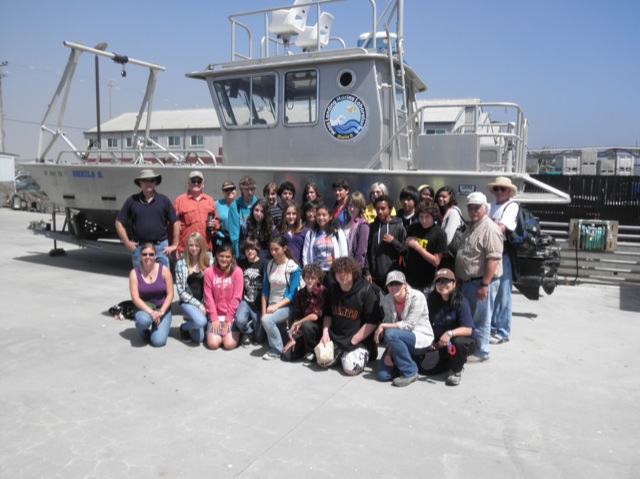
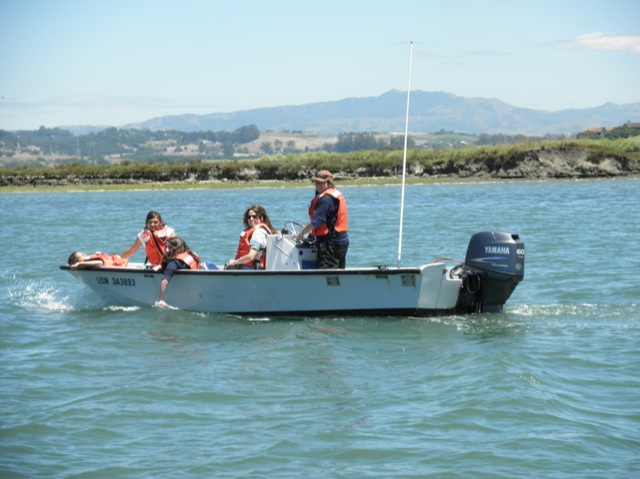
There’s no better classroom than out in the field. This June, Mr. Lane’s 8th grade science class from the International School of Monterey got up close with oceanography, with the help of some MLML Physical Oceanography grad students and staff. Having studied basic marine science and discussed human impacts on the ocean, including global warming and ocean acidification, the 8th graders had the chance to explore Moss Landing’s marine environment first hand.
The MLML crew steered the class on a boat tour of Elkhorn Slough that turned into a salty safari, with appearances by sea otters, jellies, rays, sea lions, and a variety of algae, invertebrates and birds. The MLML team highlighted the potential impacts of agriculture on the local watershed. They also introduced the class to the LOBO network, which stands for Land Ocean Biogeochemical Observatory, and is designed to track chemical fluxes throughout the slough environment.
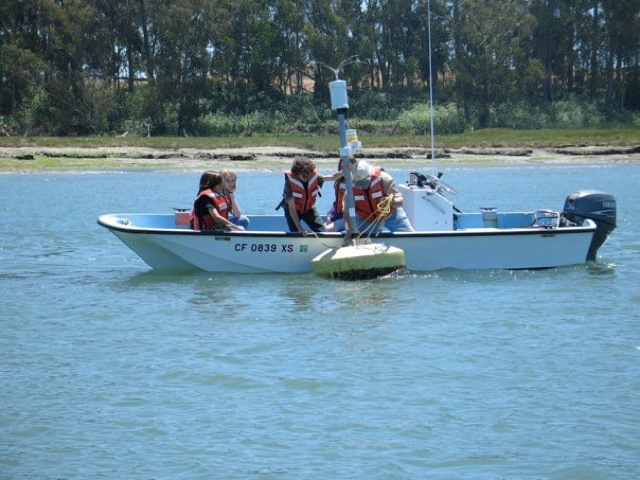
Ready to turn over the LOBO mooring (photo: M. Nakagawa)
The class tipped over LOBO mooring L01 in the main channel of the slough to get a good look at the sensor array (which monitors many properties of the water, including temperature, salinity, nitrate, oxygen, pH, and current velocity), as well as a whole bunch of organisms that decided to make the mooring their home!
The MLML team talked to the class about the work it takes to maintain this observatory network, such as periodically removing these fouling organisms from the sensors, as well as managing the continuous flow of real-time data from sensors. Tanya Novak, a graduate student in the Physical Oceanography Lab, summed up the experience this way: “They were a very enthusiastic and intelligent group of 8th graders, excited to learn and get their hands dirty. We had a blast!”
Check out these photos of their adventure and findings!
A group of intrepid explorers ready to hit the slough! (photo: T. Novak)MLML grad student Melinda Nakagawa steers a whaler through Elkhorn sough. (photo: T. Novak)
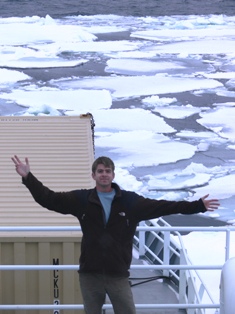
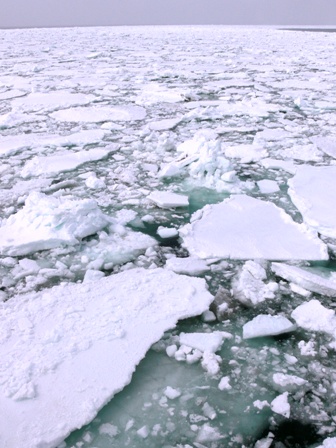
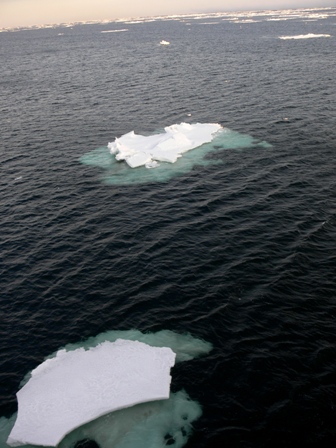
It’s early June, and there’s still ice in the Bering Sea! This year the seasonal ice cover has persisted late into the “spring” time. Much later than in recent years. In fact, it hasn’t felt much like springtime here on the water; it’s snowed (or, is it frozen fog?) on many days, and the mercury in the thermometer outside pools listlessly at about the 32F mark, even at high noon. To be sure, the ice is melting, breaking up into pancakes, jumbled, layered, and amalgamated by spring storm waves and wind… but, sloowwly, slowly… the water is still cold; as cold as the ice itself. A reluctant catalyst, at best.
(ice) pancakes, anyone? It's June 2nd...
We are surveying on the R/V Thomas Thompson, a University of Washington UNOLS ship. This is an ice-reinforced vessel, so we can push (carefully!) through this kind of cold slurry in search of oceanographic data. The scientists on this cruise are primarily interested in measuring the physics and chemistry of the spring ice retreat, and the rich plankton communities that tend to bloom and grow during this transition time. Like the first spring buds and shoots of green in a garden, the explosion of microscopic marine algae, diatoms, and copepods forms the base of a food web that will sustain all the fish we eat, and the seabirds, seals, and sea lions that also depend on them. So, this is a very important time of year in the Bering Sea!
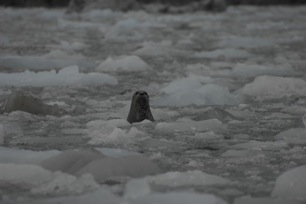
Harbor seal swimming in icy water after being flushed by a passing vessel. (photo: N. Bool)
by Colleen Young, Vertebrate Ecology Lab
Am I talking about toilet-training harbor seals in Alaska? Although that would be fun and entertaining, I’m talking about flushing as a natural behavioral response. In behavioral ecology, flushing is defined as an animal leaving its resting location on land or ice and entering the water. The concept of flushing was the premise for the research I conducted for my Masters thesis.
My project was based on the general observation that wild animals tend to flee or flush in response to anthropogenic (human-caused) disturbances. Vessels like boats and kayaks are one of the greatest sources of disturbance to Pacific harbor seals (Phoca vitulina richardii).
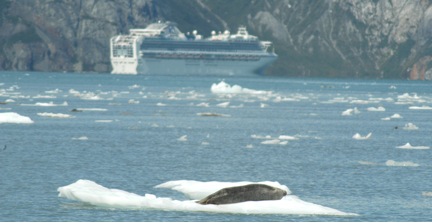
Harbor seal resting on an iceberg with a cruise ship in the background. (photo: J. Harvey)
Previous research indicated that the magnitude (how big) and frequency (how often) of the flush response in harbor seals was variable among vessel types, with non-motorized vessels like kayaks and canoes causing greater disturbance than motorized vessels. But most of those studies were based on harbor seals that haul out (come ashore) on land. What about seals that haul out on ice? Do they react in the same ways to different types of vessels?
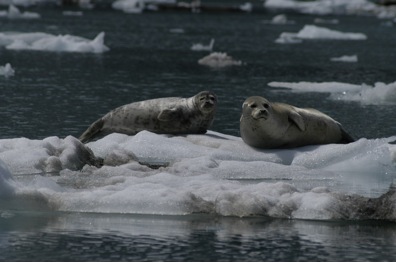
To explore that question I recruited some volunteers and hopped on a plane to Glacier Bay National Park (GBNP), Alaska. GBNP is home top Johns Hopkins Inlet, a deep glacial fjord. Johns Hopkins glacier, at the head of the inlet, is one of the few glaciers that is actually advancing. Glaciers advance during winter when snow falls on the ice field behind the glacier, pushing the glacier forward. During summer, glaciers calve, or release large chunks of ice, which are called icebergs once they hit the water below. Icebergs provide floating platforms, which are used by harbor seals for resting, giving birth to pups, and molting (shedding old fur). Johns Hopkins Inlet was historically home to one of the greatest harbor seal aggregations in Alaska, and also is a popular destination for boaters and kayakers visiting GBNP, so it was a great place to study the impacts of vessels on ice-hauling seals.
Harbor seal mom and pup resting on an iceberg in Johns Hopkins Inlet. (photo: C. Young)
After spending two summers camping in Johns Hopkins Inlet and conducting hours of observations on vessels and seals, I found that cruise ships caused the greatest magnitude of disturbance (i.e. flushed the most seals per encounter), but tour vessels caused disturbance more frequently. Kayakers caused a lower magnitude and frequency of disturbance than any other vessel type. This is different than previous research at terrestrial harbor seal haulout sites, which indicated non-motorized vessels caused greater magnitudes of disturbance than motorized vessels. Why would there be a difference in harbor seal response to vessels at ice vs. terrestrial sites? Why should we care? Stay tuned to find out!