
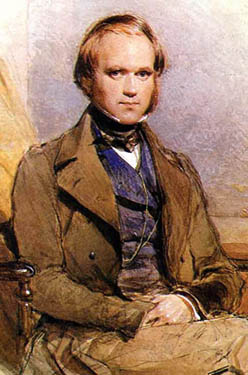
Happy Darwin Day! It’s the big 200!

Happy 200th Birthday, Charlie!

by Erin Loury, Ichthyology Lab.

Grab your favorite sister species and take her for a twirl – it’s Darwin’s 200th birthday today, and the science commuity is celebrating in style!  Many people begin their journey into the natural sciences by simply  marveling in awe at the colorful and diverse bounty of life on our planet – from the flashy fish of a teaming coral reef to the jewel-toned butterflies of the rainforest.   A multitude of species exist in all shapes and sizes, each the product of successful genes passed on over millennia.

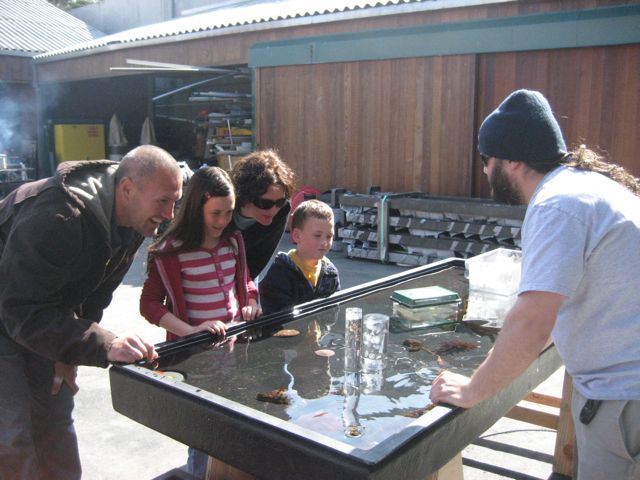
Today we raise our beakers to toast the man who took the time to understand what could bring about such diversity, without even knowing that genes existed.  We celebrate the man who grounded our understanding of evolution by describing it’s underlying mechanism of natural selection, as published in his famous book The Origin of Species, which also marks it’s 150th anniversary this year.    Surely that’s a reason for a party if there ever was one, and celebrations are happening around the world (find one near you!).  There’s even one in our backyard at the Pacific Grove Museum of Natural History, where several Moss Landing scientists and MLML graphic artist Lynn McMasters have helped create a beautiful exhibit in honor of Darwin.

You can celebrate by reading some  interesting Darwin tidbits here, and just for fun try checking out your local plant and animal life with the keen eye that Darwin must have had.  What are the details he might have picked up on?  Maybe you’ll develop some truly “original” thoughts!

Surveying Skuas and Jumping Glaciers

Kristen Green
Kristen Green

by Kristen Green, Ichthyology Lab

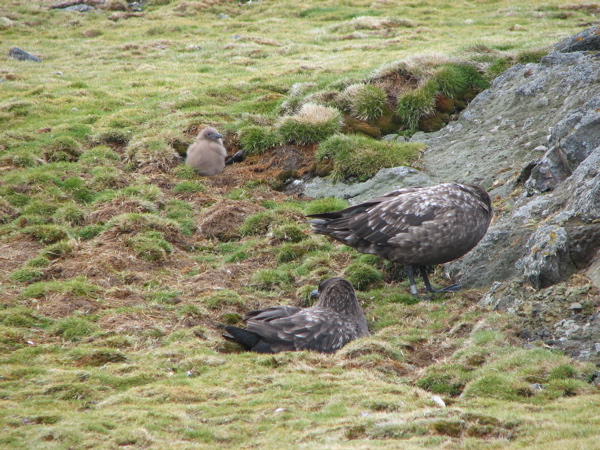
Being surrounded by hundreds of penguins can sometimes make you feel like you’re losing your mind, but luckily, we also work with other bird species. The first of these are skuas, predatory birds that have conveniently timed their arrival to the island just as the penguins start to lay their eggs. The skuas harass the penguin colonies relentlessly, and with greedy success. Today I saw a pair of skuas working the colony, one swooping on a nest, scattering a skittish penguin, while another one grabbed the egg. Skuas pair up, often with the same mate season after season, and patrol and defend their territories. Each of us is responsible for covering a set of territories throughout the season to record skua sightings and track the reproductive success of breeding pairs.

Brown skuas guard their fluffy chick (photo:  L. Asatao)
Brown skuas guard their fluffy chick (photo: Lara Asatao)

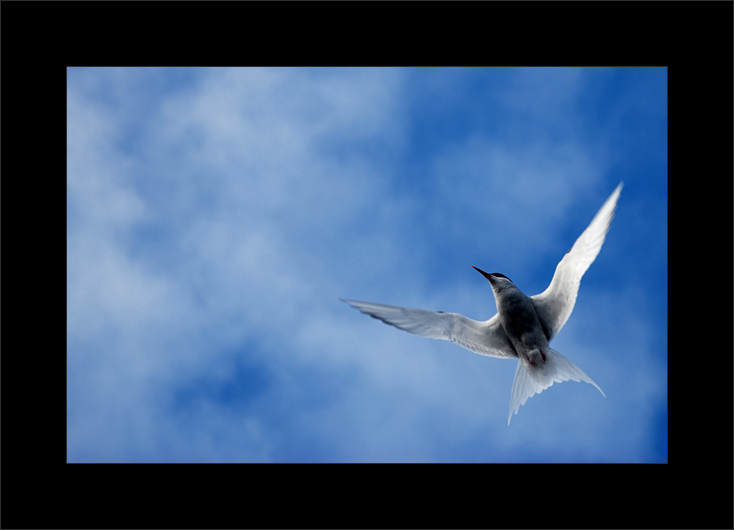
I like my skua rounds; our work is solo, and one of the few times you get to be alone here.  My route takes a few hours and follows a circuitous route over hills and moraines with incredible views of the island and the bay. This is an island that can completely reinvent itself from day to day, and sometimes even hour to hour and I have yet to get tired of seeing a different view each day. My route ends near the beach, at a huge rock formation aptly named the Sphinx. Near the Sphinx, the tiny Antarctic terns cry and swoop to defend their nests.

Piotr Angiel)
An Antarctic tern catches some air (photo: Piotr Angiel)

I like these birds because they are beautiful; when silhouetted against the sky, their white bodies look almost translucent except the flash of orange beak. Also, weighing in at just over 100 grams, this is a bird that cannot hurt me. The penguins (with good reason) rail at my shins, inflicting flipper-slapping bruises, and tear up my hands with rapid fire pecking. The skuas (I’ve heard) hurl themselves at intruders to defend their territory once they have laid eggs.

Read more

Drinking in their schoolroom and sleeping in their toilet

Erin Loury
Erin Loury

by Erin Loury, Ichthyology Lab

Classes are back in full swing here at Moss Landing, which partially explains the sporadic nature of our blog posts (my apologies!).  BUT!  I am very excited about the coming few months because, despite being a member of the Ichthyology (or fish-geek) lab, I am just now taking a basic ichthyology class for the very first time.  Which just goes to show that you can be a late-bloomer in your study interests and still make it to grad school!

getting it all done in water
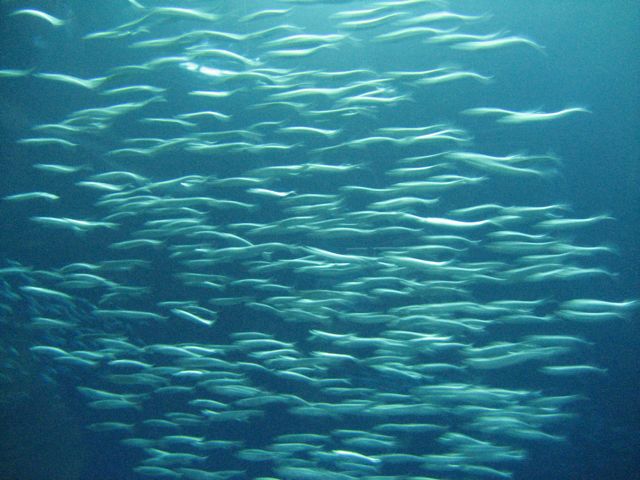
The life of a fish: getting it all done in water

In any case, I will have lots of fascinating little tidbits to share with you about our fishy friends, and will hopefully be able to convince  you why they (and the world thy live in)  are just so cool.  Take this, for instance.   If I asked you where fish live, you would (hopefully) say, “In water, obviously.”  But take a minute to think about what that means – and how very different life would be compared to our air-filled, land-based existence.  On our first day of class last week, Dr. Greg Cailliet, our fearless lab leader and class instructor, shared with us this quote from an ichthyology text by Karl Lagler (1962):

“Water is highway, byway, communications medium, nursery, playground, school, room, bed, board, drink, toilet, and grave for a fish.”

Phew!  All of that happening in the same interconnected space.  Greg added that students at MLML may very well have the same attitude towards our lab – all except for the grave part, we can only hope.  (I mean, a thesis is hard, but that’s just asking a little too much).  In any case, I thought the comparison was very fitting.

So how do fish do it?  How do their lives work when every basic function, from breathing to eating to growing to mating to sleeping to escaping all have to happen in water?  I hope you’ll stay tuned to find out the answers and more.  For now, this little fish is going to get out of the school room before it turns into a bedroom!

Let them Eat Pie

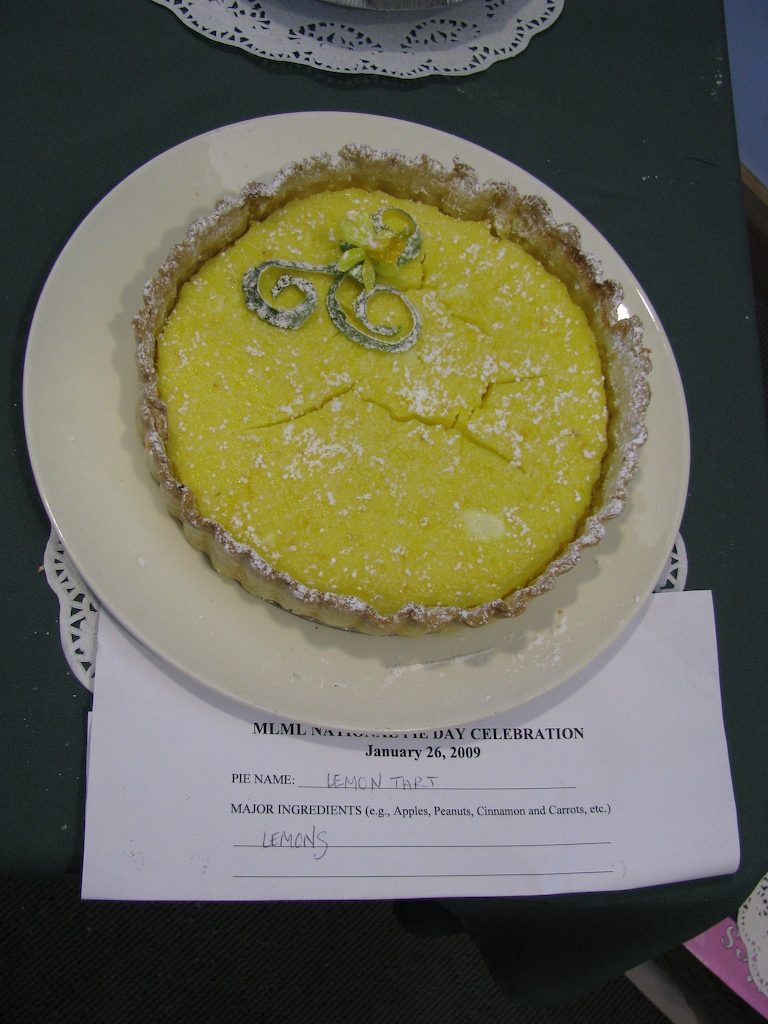
A sweet victory for the winning pie!
A sweet victory for the winning pie! (photo: Laura Dippold)

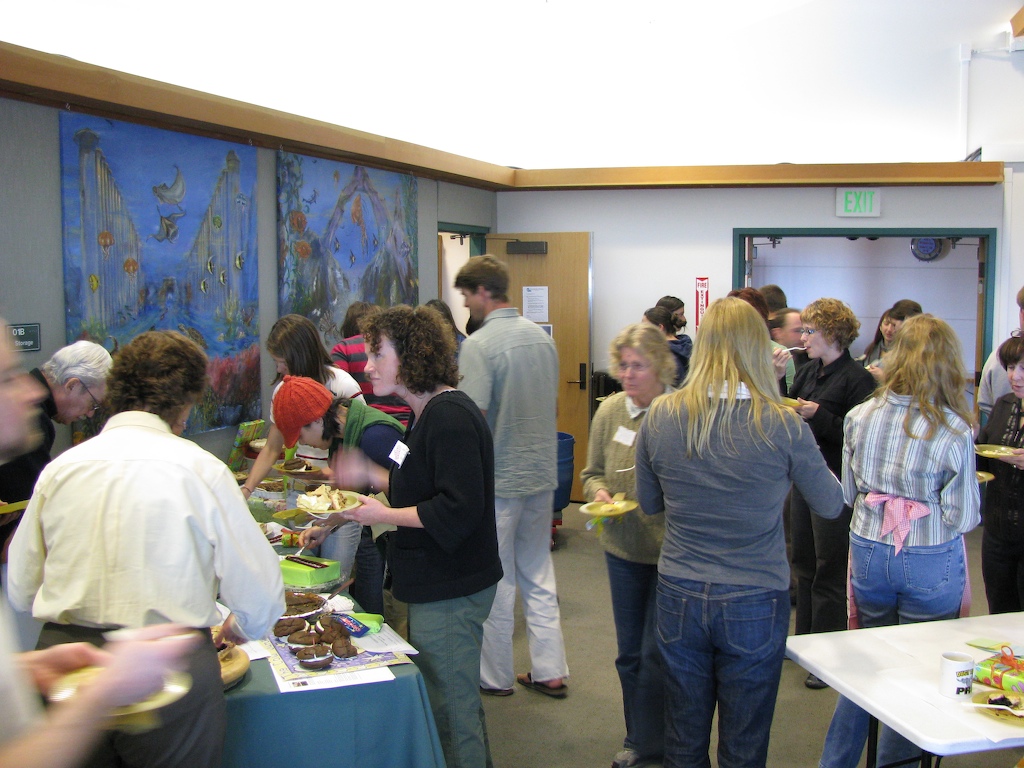
National Pie Day is January 23rd (it’s true! honest!), but here at Moss Landing we operate on a, shall we say, more flexible calendar.   Pie lovers gathered from across the lab yesterday to observe this most solemn occasion with a lab-wide bake off, featuring pies ranging from the sweet of apples, blueberries and chocolate, to the savory of eggs, bacon and tamales.    Kudos to the judging committee for creating such creative prize categories to accomodate the potpourri  of entries, including “Most likely to raise your cholestorol” and “Most likely to taste better than it looks.”  Congrats to Zea Walton for her grand-prize winning lemon tart, that was also voted “Most Dreamy,” and to runner up Mike Gordon, whose blueberry pie was voted “Most likely to be made by a grandma.”

Hats off to National Pie Day!
Hats off to National Pie Day! (photo: Laura Dippold)

No marine organisms were harmed in the making or eating of these pies.

Charging Penguins!

You’ll never see a penguin soaring in the sky since they’re one of many groups of flightless birds (can you think of others?).   With their dense torpedo-shaped bodies, penguins are adapted for speedy swimming, and do all of their flying underwater.  But did you know they can also run? Enjoy this video of a penguin chase taken while MLML alum Cassandra Brooks was down in Antarctica.  Two Gentoo penguin chicks are running after their mom – and they’re about as (un)coordinated as some human kids I know!  Why do you think they’re in such a hurry?

[youtube=http://www.youtube.com/watch?v=kTCs_FdbBM8]

Filmed at the Copacabana field camp on King George Island, South Shetland Islands, Antarctica. Video by Lara Asato, 2006.

Report Peculiar-Acting Pelicans

Brown Pelican
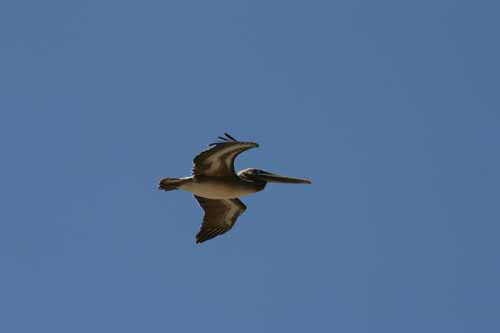
Disoriented pelicans are wandering far from home (photo: Josh Pederson / SIMoN NOAA)

Soaring in “flight formations” above the ocean on its 6-foot wingspan, plunging straight down into the water in a spectacular dive, swallowing fish its large pouch of a bill –  these are all very normal behaviors expected of a brown pelican.  But wandering alone around inland parking lots, back alleys and farmfields, appearing skinny and sickly, or even turning up dead –  most decidedly not normal behavior.  Which is why  record numbers of sick and dead brown pelicans since late December, which have been filling wildlife rehabilitation centers along the California coast to their capacity since late December,  have many researchers puzzled and worried.  The California population of these great  birds are federally listed as endangered, having been nearly wiped out by DDT before the pesticide was banned in 1972.  They have since made a successful recovery, but the recent spike of birds exhibiting odd behaviors and turning up dead has scientists scrambling to find a cause.  Some birds tested positive for domoic acid, a neurotoxin produced by photosynthetic algae, but their symptoms do not include the seizures normally triggered by domoic acid poisoning, leading scientists to believe this may only be part of larger problem.

People are reporting that affected pelicans  look emaciated and disoriented, and the usually-social birds are showing up alone in unusual places far from home.  If you see any sick or dead pelicans, please contact WildRescue at 866-WILD-911.

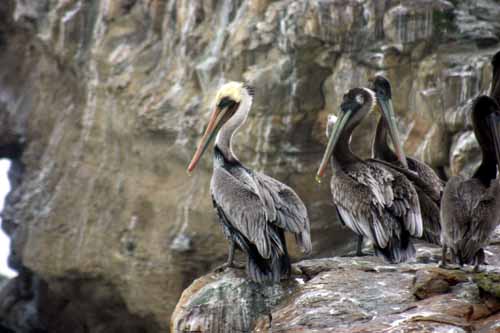
Adult (white head) and juvenille (dark head) brown pelicans
Adult (white head) and juvenille (dark head) brown pelicans (photo: Josh Pederson / SIMoN NOAA)

What’s in a Great White Shark Stomach? Watch a Live Dissection!

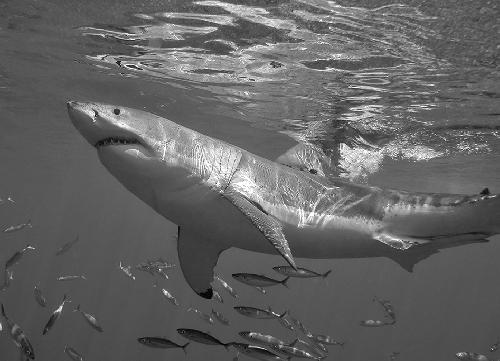
What's in a white shark stomach? ((c) Terry Goss 2006/Marine Photobank)
Find out what a great white's been eating! ((c) Terry Goss 2006/Marine Photobank)

Ever wondered what a great white shark has munched for lunch? The Aukland Museum of New Zealand is inviting the public to join them at 11 am on January 8th (NZ time) as they dissect a 9-foot-long female great white shark found dead in a fishing net. Partnering with their Department of Conservation, they hope to to raise awareness about threats facing white sharks, and to dispel some unfortunate, deep-seeded myths about this species.

Can’t make the next trans-Pacific flight for a dockside seat? Never fear! The whole necropsy (an animal autopsy) will be broadcast on the web at 5 pm tonight, California time! (that’s after 2 pm tomorrow, New Zealand time!)

[update: Here’s the whole video.]

[vodpod id=ExternalVideo.768560&w=425&h=350&fv=autoplay%3Dfalse]

more about “Live Dissection of a Great White Shar…“, posted with vodpod

Best of The Drop-In from 2008

As we gear up for a new year of splashy Moss Landing graduate student adventures, check out some Drop-In highlights from our first 10 months of kicking around in 2008:

We flocked from pole to pole, from Nate Jones’ surveys of seabirds in Alaska’s Bering Sea, to Kristen Green still rubbing elbows with penguins down in Antarctica.  Kyle Reyonlds warmed things up with a trip to the hot vents of Fiji’s deep sea, and Jeremiah Brower brought us up close and personal with some very old rocks.

Amanda Kahn regaled us with the multifaceted lives of sponges, even writing about them for the popular Deep Sea News blog.  Danielle Frechette showed us why balloons can spell bad news for wildlife, while Erin Loury waxed poetic about scurvy and poked around in kelp holdfasts.  To round things off, we hosted a successful Science Cafe at the labs, drummed up some coverage in the local press, and responded to some exciting questions from you!

Thanks for reading The Drop-In and getting curious about our research and experiences!  We look forward to bringing you along for the ride in 2009.

Get ready to dive back into the marine mix with us!

Lost in a Sea of Penguins

Kristen Green
Kristen Green

by Kristen Green, Ichthyology Lab

Seven species of penguins can be found on the Antarctic continent and sub-Antarctic islands. King George Island has been described as a ‘cosmopolitan’ place for penguins, as three of these seven species can be found here: Adelies, Gentoos, and Chinstraps. Each species has evolved to fill different niche to coexist successfully. Adelie, Gentoo, and Chinstrap lay their eggs a few weeks apart. This means that the chick hatching and fledging (when the chicks enter the water to forage on their own) are also separated by a few weeks for each species.

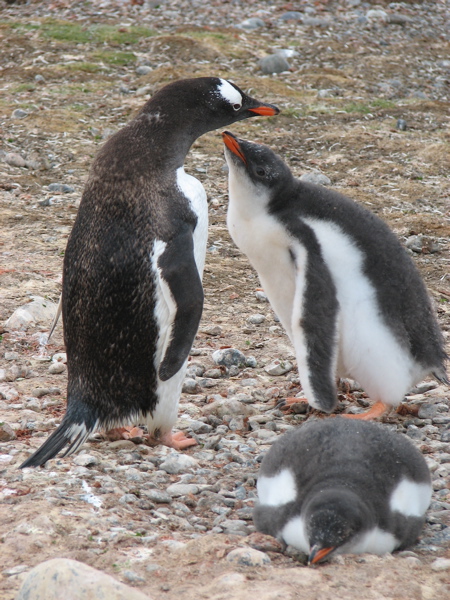
Lara Asato)
Mom, I'm hungry! A Gentoo peguin chick taps its parent's beak to summon a freshly delivered meal. (photo: Lara Asato)

This may be one adaptation to lessen the competition for shared food resources, i.e. Antarctic krill, during the critical time period when chicks are being nurtured. The Chinstrap penguins are the last to lay eggs, and the first Chinstrap penguin observation on the island was actually 6-foot-tall Dave, the field leader who created a fairly elaborate Chinstrap penguin costume for Halloween from our excellent supply of trash bags, rags, and cardboard!

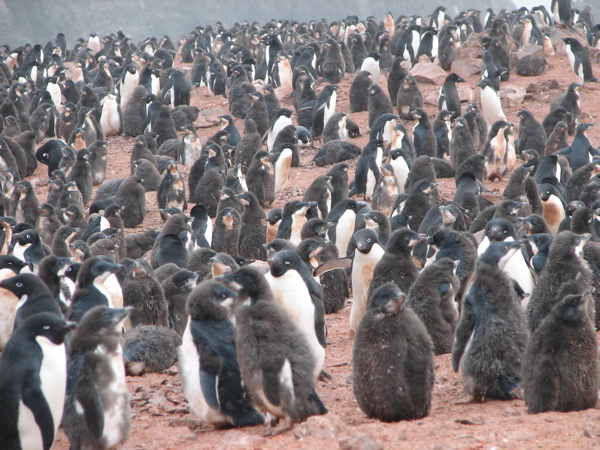
Meanwhile, we are still tracking and banding Adelie and Gentoo penguins to monitor reproductive success. We take daily attendance at each site where we have banded birds. This kind of makes me feel like a schoolteacher, as I check off whether the female or male is present and incubating the eggs on a particular day……except for the day when a nest with banded birds simply disappeared. I walked into the colony, and checked off all the other birds at my site, only to realize I couldn’t find the banded bird that should be at my feet. I consulted my map, looked down…..consulted my map, looked down….but couldn’t find the bird I had recorded in this spot every other day this week. Surrounded by hundreds of identical, cackling birds, I had a sinking feeling I was losing my mind.

lara-097
Where's that one penguin? Where's Waldo? Where's my mind??? (photo: Lara Asato)

I guiltily admitted this to the field leader. He laughed and said if a nest fails i.e. the eggs have been lost due to predation, weather etc., the penguins will abandon it. Regardless, working alone around penguins sure makes you second guess your sanity sometimes!

Thank You, Ocean

If you’re in the habit of being thankful or counting your blessings amid the hectic frenzy of the holidays, why not add the ocean to your list?

Thankyouocean.org is a website from the California Public Ocean Awareness Campaign that has tons of information about how you can volunteer, learn about, and speak up for the ocean.  Be sure to check out their podcast, the Thank You Ocean Report, which features topics ranging from sharks and sea otters to National Marine Sanctuaries, and the Marine Life Protection Act.  Like all the best gifts that don’t fit in boxes, the ocean gives us plenty of reasons to say “Thank you!”

[youtube=http://uk.youtube.com/watch?v=A1AXBHG391E]

Happy Holidays from The Drop-In!