
Thesis Defense Roll Call – Congrats from the Drop-In!

With one more semester over and the year drawing to a close, we wanted to take a look back at the amazing thesis defense lineup of the past fall.  We got to cheer on some of our great Drop-In blog contributors as they became newly-minted Masters.  While we’re excited for them in their new endeavors, fingers crossed that they will still write for us from time to time!   Get a load of all the intelligence pouring out of Moss Landing Marine Labs:

Jeremiah Brower, the sediment master

On October 4th, Jeremiah defended his thesis, entitled, “A study of storm-induced variations in the littoral sediment transport patterns of central Monterey Bay.” Read more about Jeremiah’s love of geology and all things to do with rocks on his student profile and his blog entries!
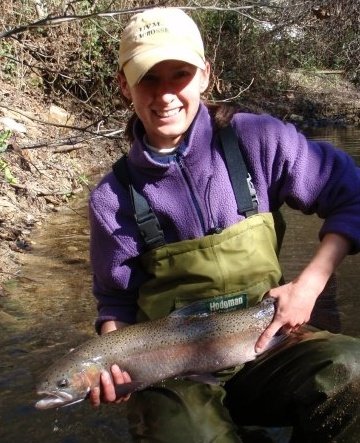
Danielle Frechette with a salmon – she studied both halves of a bird/fish predator prey interaction.

On October 26th, Danielle Frechette talked about tracking sea gulls tagged with radio transmitters as part of her thesis entitled, “Impacts of avian predation on juvenile salmonids in central California watersheds.”  Check out Danielle’s student profile and read her blog entries!
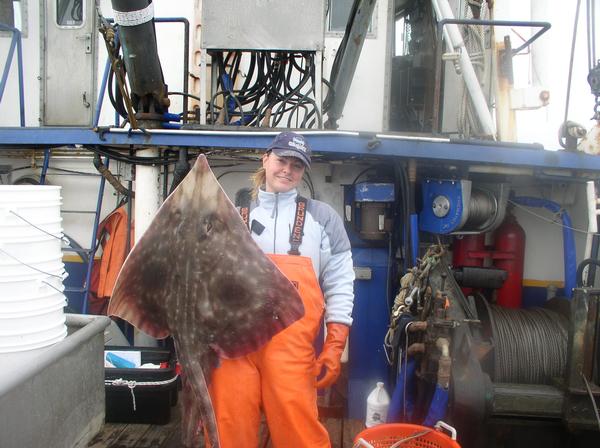
Mariah Boyle with a long-nose skate.

On November 2nd, Mariah Boyle described the food habits of the roughtail skate and its deepsea food web with her thesis “Trophic relationships of Bathyraja trachura and sympatric fishes.” Check out Mariah’s student profile and read her blog entries!
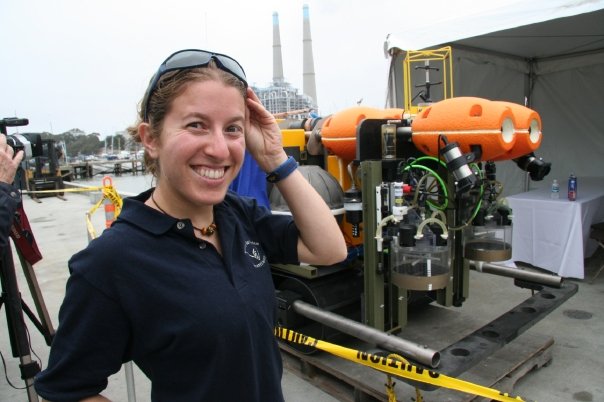
Amanda Kahn, an expert on deepsea sponges

On December 8th, long-time Drop-In blogger and resident sponge expert Amanda Kahn defended her thesis entitlted “Mitochondrial gene arrangement in sponges, with descriptions of two new species from the abyssal northeast Pacific.”  Check out Amanda’s student profile and read her blog entires!
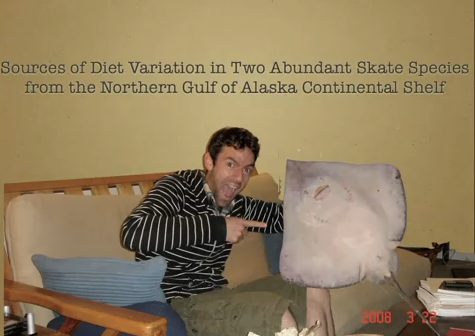
On December 10th,  Simon Brown gave us a statistical rundown on skate diet in his thesis entitled, “Sources of diet variation in two abundant skate species from the northern Gulf of Alaska continental shelf.”  Congrats, Simon!
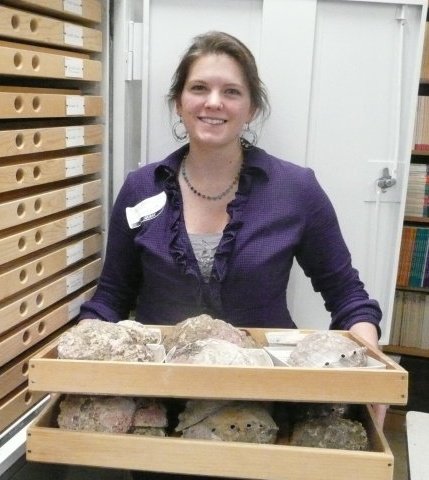
Heather Hawk shows off some historical abalone specimens.

On December 15th, Heather Hawk gave us the ins and outs of abalone genetics by defending her thesis entitled “Historic diversity of the endangered white abalone Haliotis sorenseni.” Check out Heather’s student profile here!

Congratulations to all of you, and thanks for sharing all of your stories on the Drop-In!
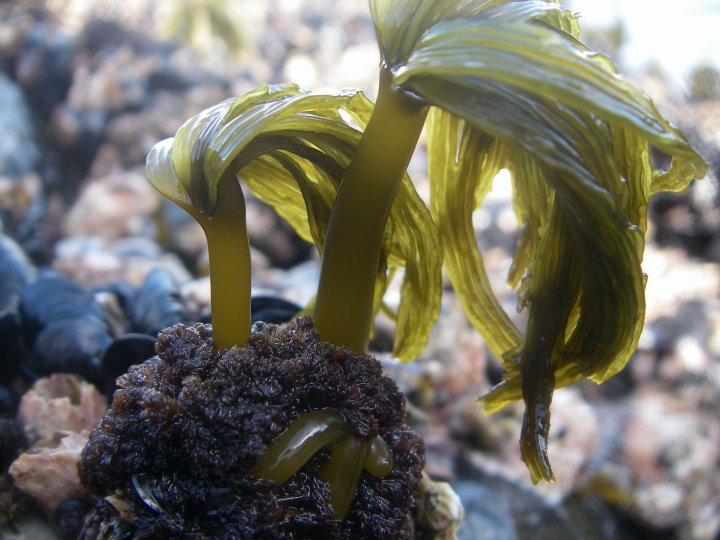
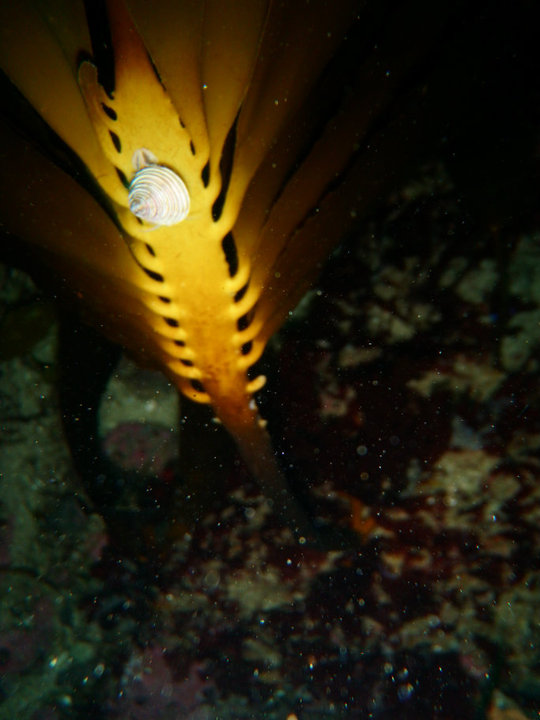
A Charlie Brown Christmas Tree

(photo: S. Hutto)

You wont find these guys in a Christmas tree lot.  They are baby Postelsia, or sea palms, that are a species of kelp.  Just a couple of centimeters tall now, they will eventually grow to a few feet.  They live in the rocky intertidal where waves come crashing in, so they have to be really tough to avoid breaking or getting knocked off the rocks.  Although they are pretty cute, stick to enjoying these guys with your eyes, as it is illegal to collect them or pull them off of the rocks.  A great way to appreciate Postelsia is to photograph it, as you can see from above that it’s quite photogenic!

Merry Christmas and Happy Holidays!

Safe Travels for the Holidays

(photo: E. Loury)

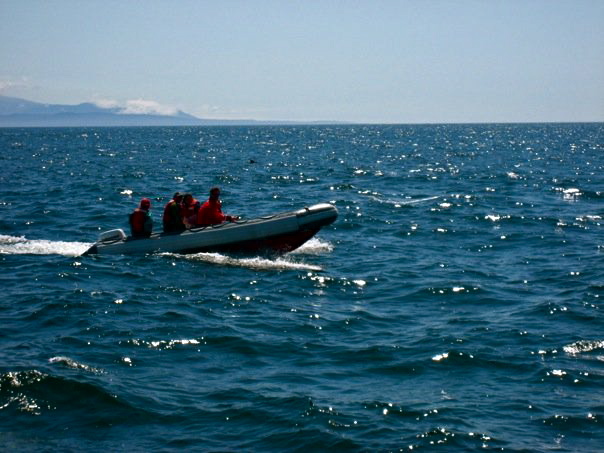
It doesn’t look like these folks from MLML will be running into any rush hour traffic.  They are out on the bay in an inflatable as part of a class field trip.  Trips into the field are just one of many ways MLML students get actively involved in research for classes.

But You Only See My Faults

(photo: H. Hawk)

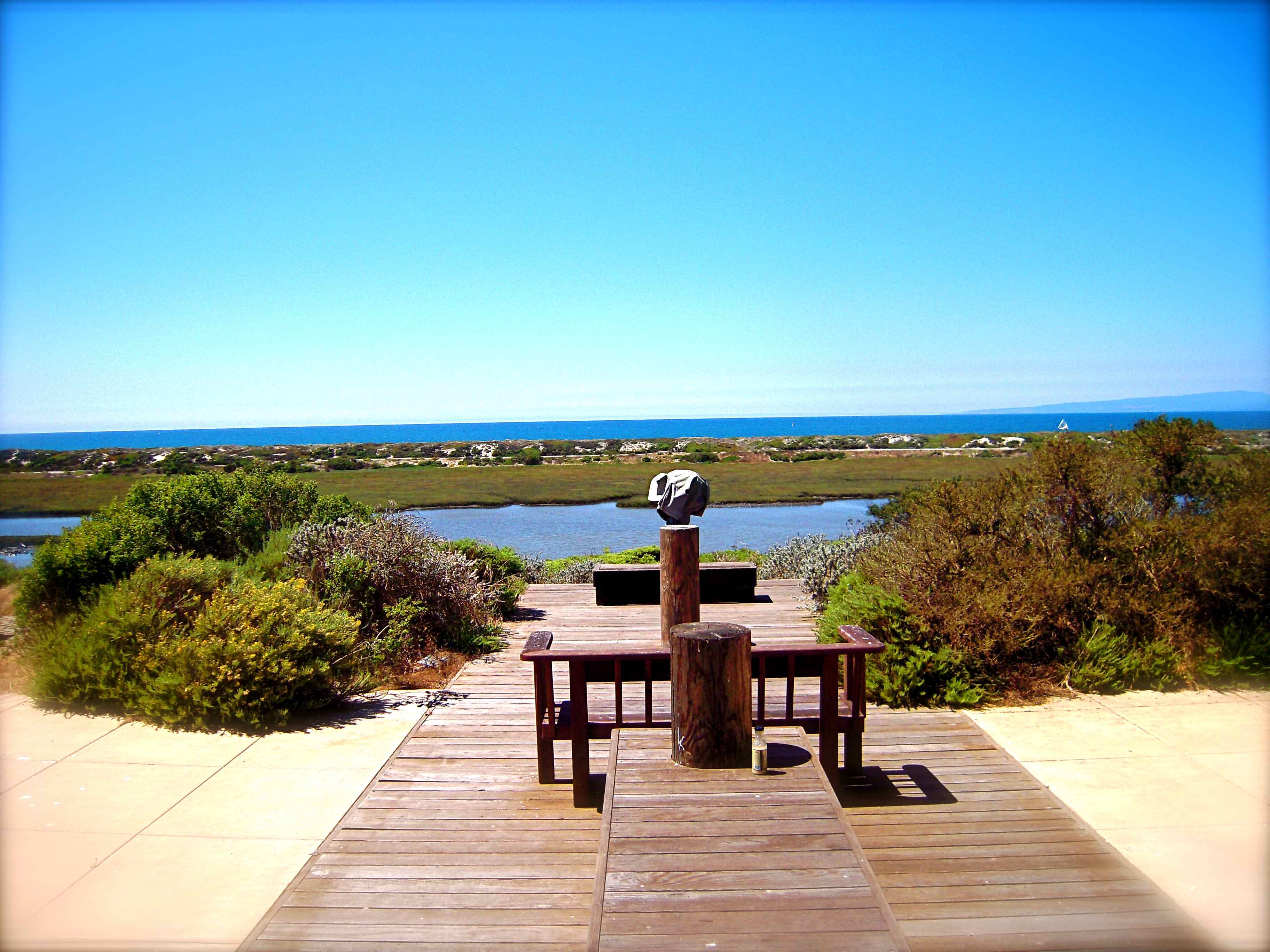
It may be hard to believe, but that concrete canal is broken because the earth here actually moved.  The canal was built on a fault line, which makes it so easy to see the results of tectonic activity.  A student in the Geological Oceanography class takes a look while on a field trip.

No, That’s Not Alphabet Soup

(photo: H. Hawk)

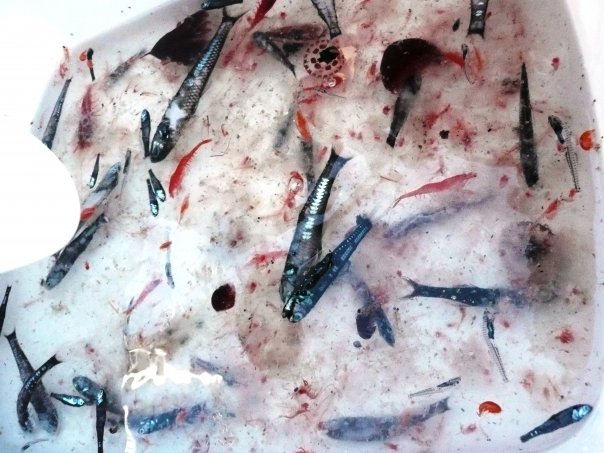
It’s the catch from a midwater trawl.  The fishes you see are Myctophids, or different kinds of lanternfishes that live in the deepsea.  They have the amazing ability to produce light, or bioluminesce.  Also in this picture are many types of plankton, that include the red, shrimp-like invertebrates you see.  Can you find the jelly?

Surfs up, and so is the sand!

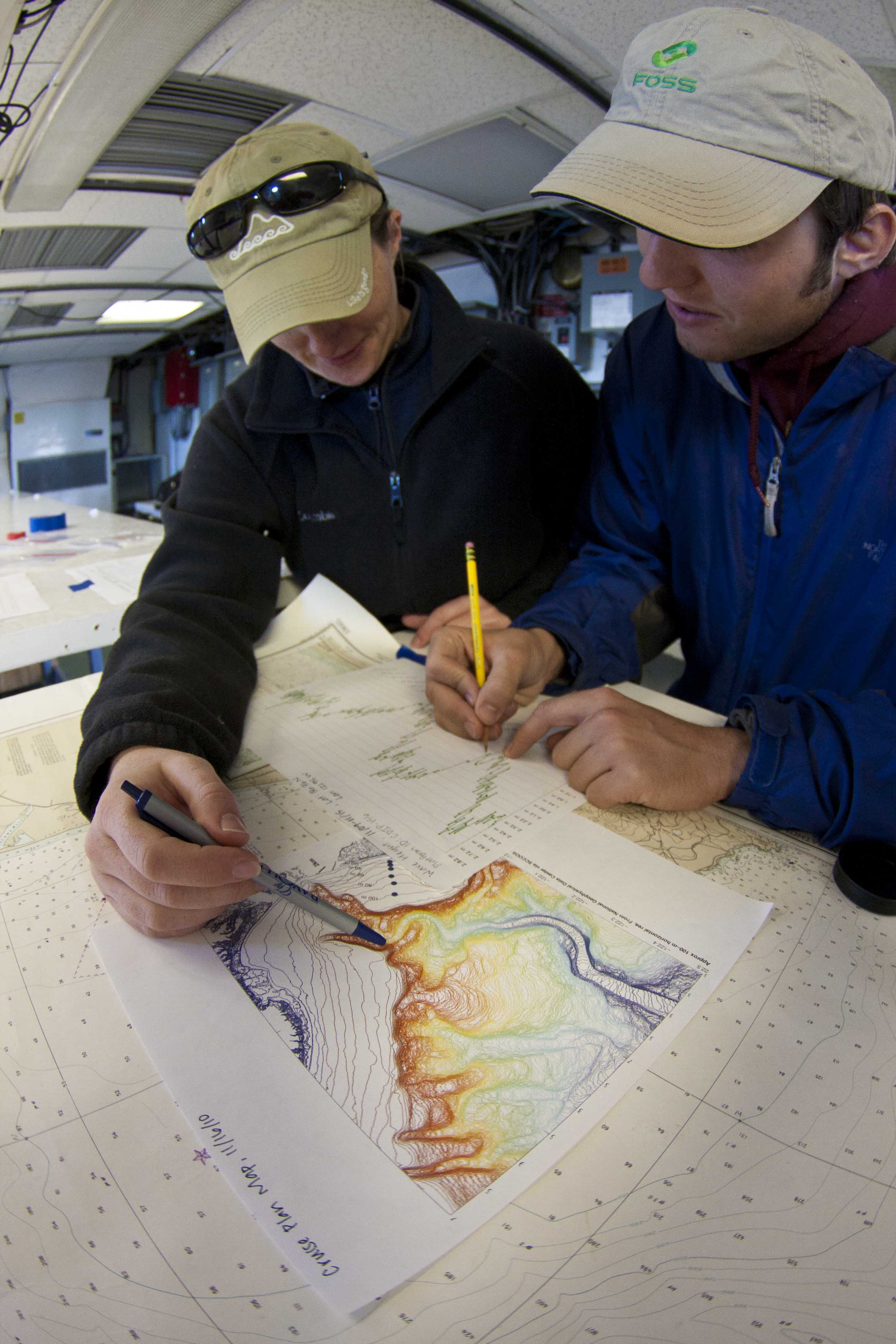
MLML Physical Oceanography students Casey Clark and Kristen Meagher compare ocean swell and seafloor data aboard the R/V Pt. Sur. (photo: S. Gabara)

How does the ocean swell affect the movement of sediment on the seafloor in Monterey Bay? To answer this, just board the 135-foot Research Vessel (R/V) Point Sur and join students Casey Clark and Kristen Meagher of the MLML Physical Oceanography class.  They are using wave height and seafloor maps to speculating on how wave intensity influences sediment movement in Monterey Bay.