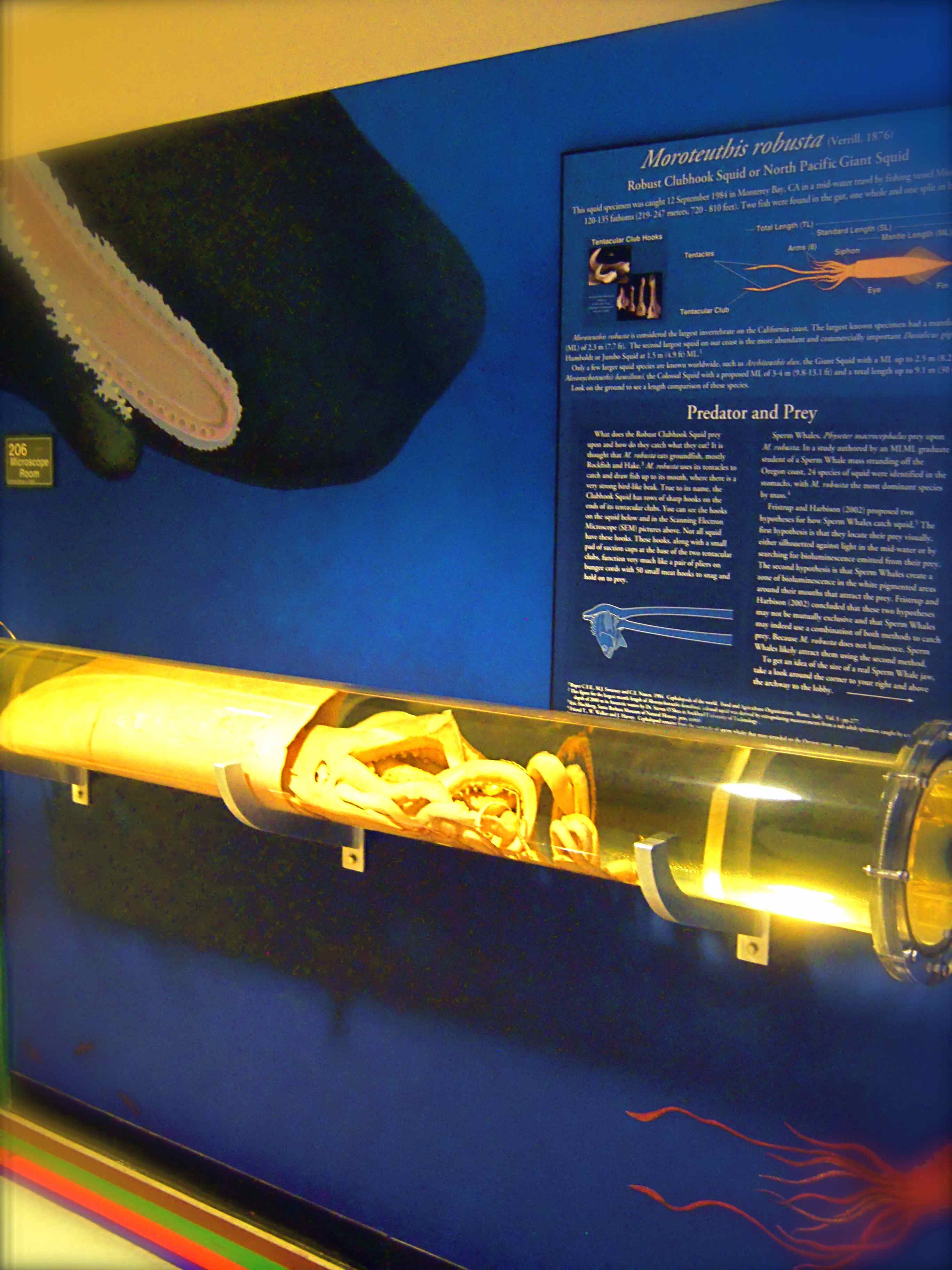
Going eye to eye with this Robust Clubhook Squid is one of the many experiences that await visitors who tour Moss Landing Marine Labs. Large squid are favorite snacks of sperm whales, as the artist’s rendering on the wall suggests. You’ll notice that the sperm whale doesn’t have any teeth on its upper jaw. How did MLML grad Mariah Boyle use this fact to keep the peace between villages in Fiji? Find out in The Case of the Missing Sperm Whale Teeth!
So far, this event has been the highlight of my graduate school career. I got to dive in the kelp forest tank at the Monterey Bay Aquarium. The same tank that I stared into for hours as a kid visiting Monterey on summer vacation, thinking, “How amazing are the people who get to dive in this tank? They must have qualifications that I couldn’t even think of getting.”
Well, I guess I was wrong! I have earned those qualifications while in grad school at MLML. I’ve earned my open water diver, rescue diver, master diver, scientific diver, and Reef Check ecodiver certifications, all in the short three years that I’ve been a student. And, the Aquarium even asked me (okay, asked the MLML Phycology Lab, which I’m a part of) to help them by surveying the algae in their kelp forest tank!
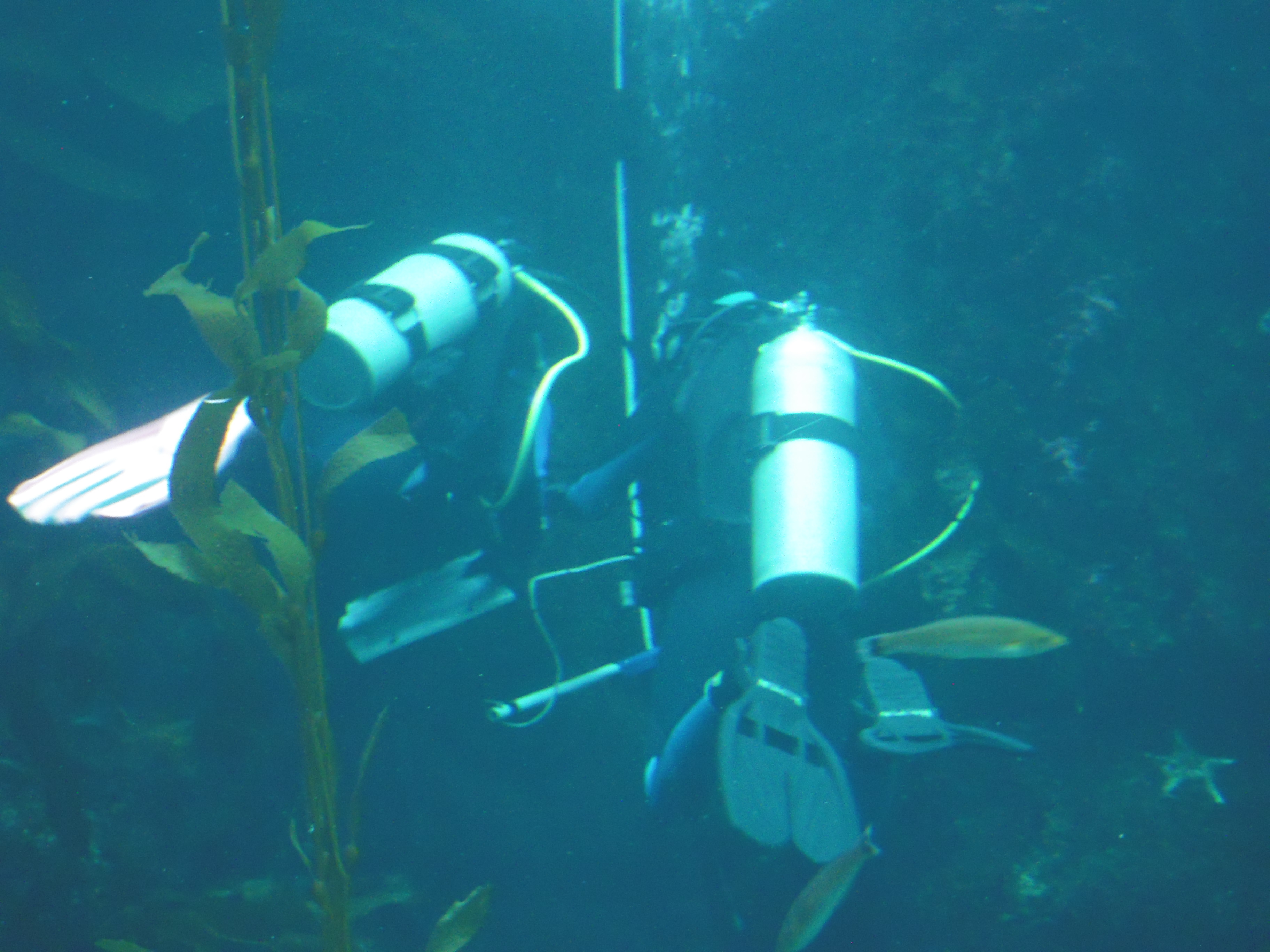
Sonya and I working in the Monterey Bay Aquarium kelp forest tank
You see, some of the seaweed in the kelp forest tank is “planted” there by aquarium staff, but some of it shows up on its own. These “volunteer” seaweeds come through the aquarium’s seawater system as spores that settle and grow in the tank. The aquarium staff like to know who all of the critters inhabiting their tanks are, and that’s where the Phycology Lab comes in. Since we spend much of our graduate career studying and identifying seaweeds, we can survey the algae in the kelp forest tank pretty quickly and easily. And every few years, we get to!
I couldn’t help but chronicle this event on the GoPro underwater video camera that I got for Christmas. Why don’t you follow along with our dive, and I’ll explain what we’re doing. Jump on in:
In this first video we’re gearing up. Paul gets help putting on his dive gear from Mike- there’s no reason to risk pulling something with all of that weight before you even get in the water! Sonya takes the first steps into the tank, and Arley helps her out with her mask and passes her fins. And during the time that the camera is pointed down, I’m checking my gear, making sure my regulator and back-up works. Every good dive starts with good planning and safety checks!
Finally, it’s my turn to get in the water! Speedy Paul climbs into the tank, gears up, and eases in before me. I make my way down the steps and take a seat, where I can comfortably and securely put on my fins. Then my mask goes on, and Arley hands me the RPC – random point contact – bar and makes some final adjustments. Into the tank I go!
I submerge, and take my first look around the tank. It might be hard to believe, but diving in the aquarium was a little stressful at first. We had to stay far away from the glass because our tanks could chip or crack it, we needed to avoid making big fin strokes because we could tear out or damage the kelp, and with seven people and all of those fishes in an enclosed space, we had to keep from kicking each other!
You’ll see the white vertical line – this is our transect line that we sampled along. I waited for my partner Sonya, and she found the place along the line where we were to take our first sample. My job was to place the RPC bar on this spot, then hold the marks on the line up to the place on the rock where Sonya identified the algae growing there. That way, we sampled a random place each time.
Sampling went smoothly and I got some great video, up until the point where the camera decided to make a break for it! Here you can see that it falls off of my head, and spirals toward the kelp forest tank floor. Thankfully we were in an enclosed space, and Paul rescued the camera later on. I’ll be securing it to my buoyancy compensator next time I take it for a dive!
So, that concludes this adventure. Thanks for joining me on my dive in the Monterey Bay Aquarium kelp forest tank! I’ll be taking the GoPro with me on future dives, so stay tuned for more videos of my adventures as an MLML grad student.
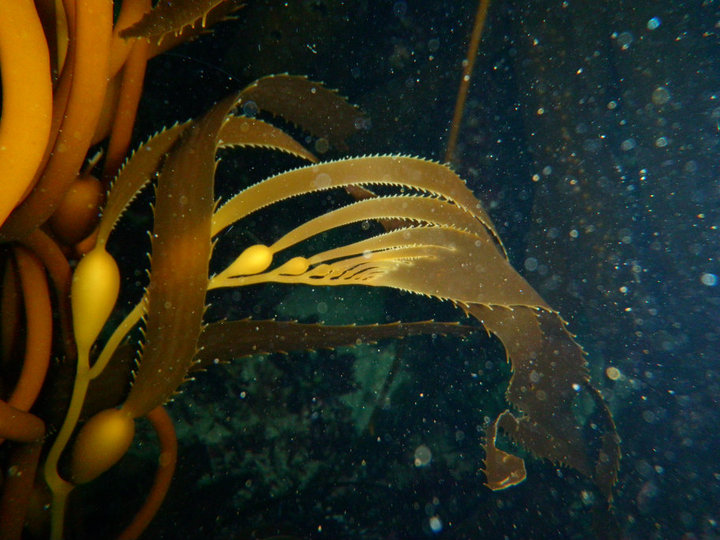
No, this isn’t a deadly weapon. But it does have a blade, or actually, many of them! This is the end of a giant kelp frond, better known as the “scimitar” blade due to its resemblance. Here, new blades are formed. As the blade grows, it slowly tears itself away from the scimitar and becomes an individual blade. You can see several new blades forming in this scimitar blade, and the ones just to the left are the newest blades that have already separated.
Does the scimitar blade look familiar to you? Well, if you’ve ever visited the Monterey Bay Aquarium then it should be! The Monterey Bay Aquarium uses the scimitar blade as part of its logo, which you can see on their website.
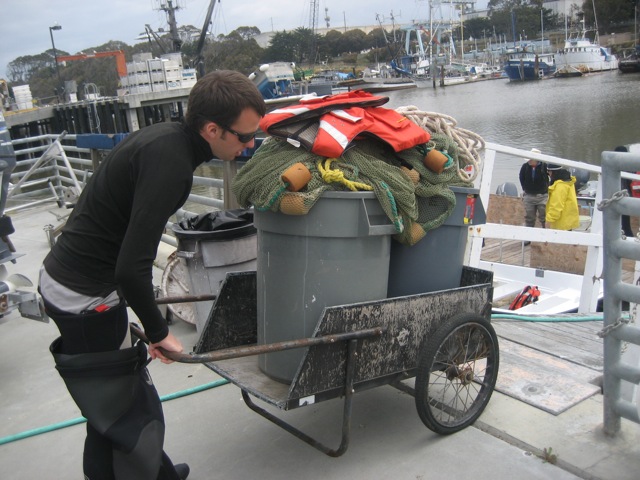
Proceed with caution! Ichthyology student James Knuckey wheels the gear for an ichthyology class field trip down to the docks. Many classes and student projects take advantage of MLML’s small boats facility in the Moss Landing Harbor.
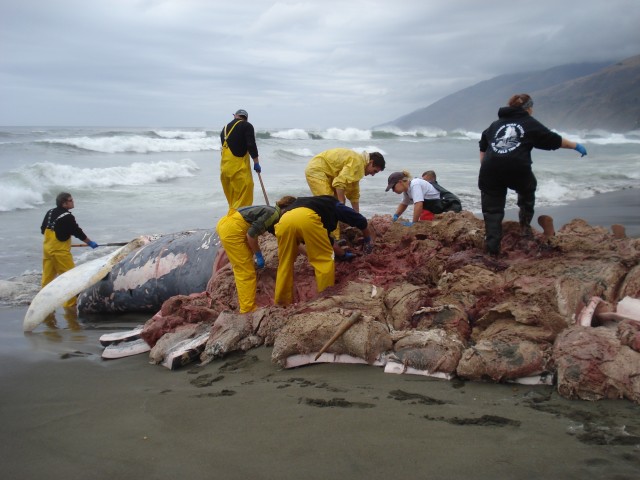
Researchers performing a necropsy on a blue whale on a beach (photo: C. Young)Gillian Rhett
By Gillian Rhett, Invertebrate Zoology & Molecular Ecology Lab
If you saw Nate’s post last month, you may have wondered: where does a whale carcass go? Sometimes it will wash up on a beach, which is lucky for us because that means we can collect all kinds of samples and information that help us learn more about how whales live and die.
But most whale carcasses don’t wash up on beaches. Initially, the gases that are a byproduct of the decomposition process build up inside the carcass and it floats, providing food for surface-dwelling animals such as seabirds. But when the remaining tissues and bones sink to the seafloor, that’s not the end of the story!
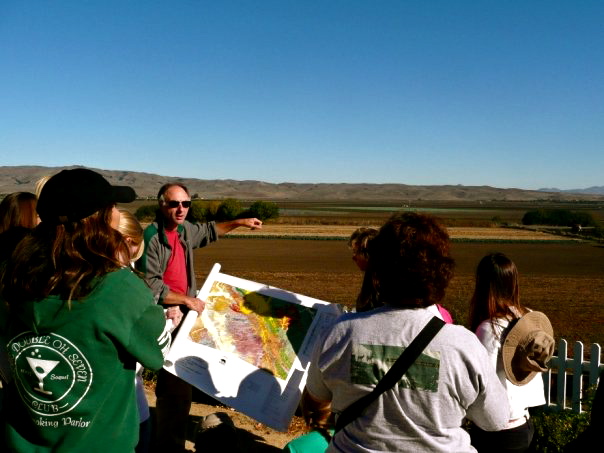
Professor Ivano Aiello points out the nearby fault line during a Geological Oceanography class field trip. The class makes many excursions to visit California’s unique geologic features, from Fremont Peak to faults in the backyard.
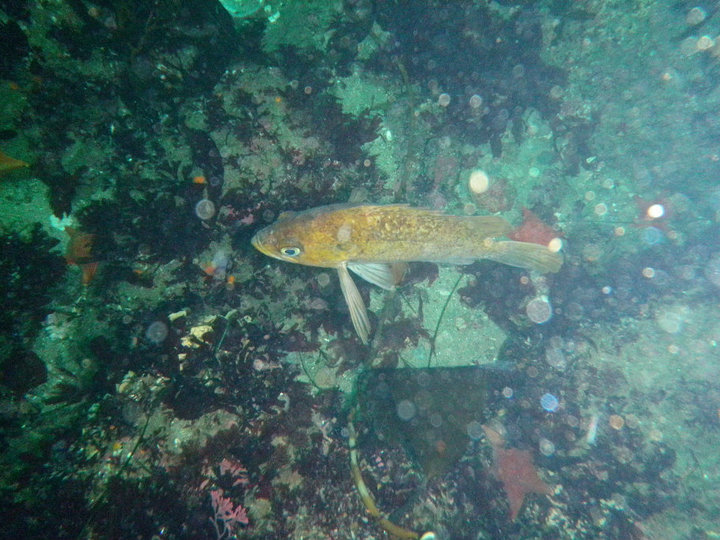
Despite its name, this kelp rockfish needn’t always associate with rocks – or kelp for that matter. It looks perfectly content cruising the sediment and algal turf area where Sarah Jeffries photographed it – maybe looking for a bite to eat.
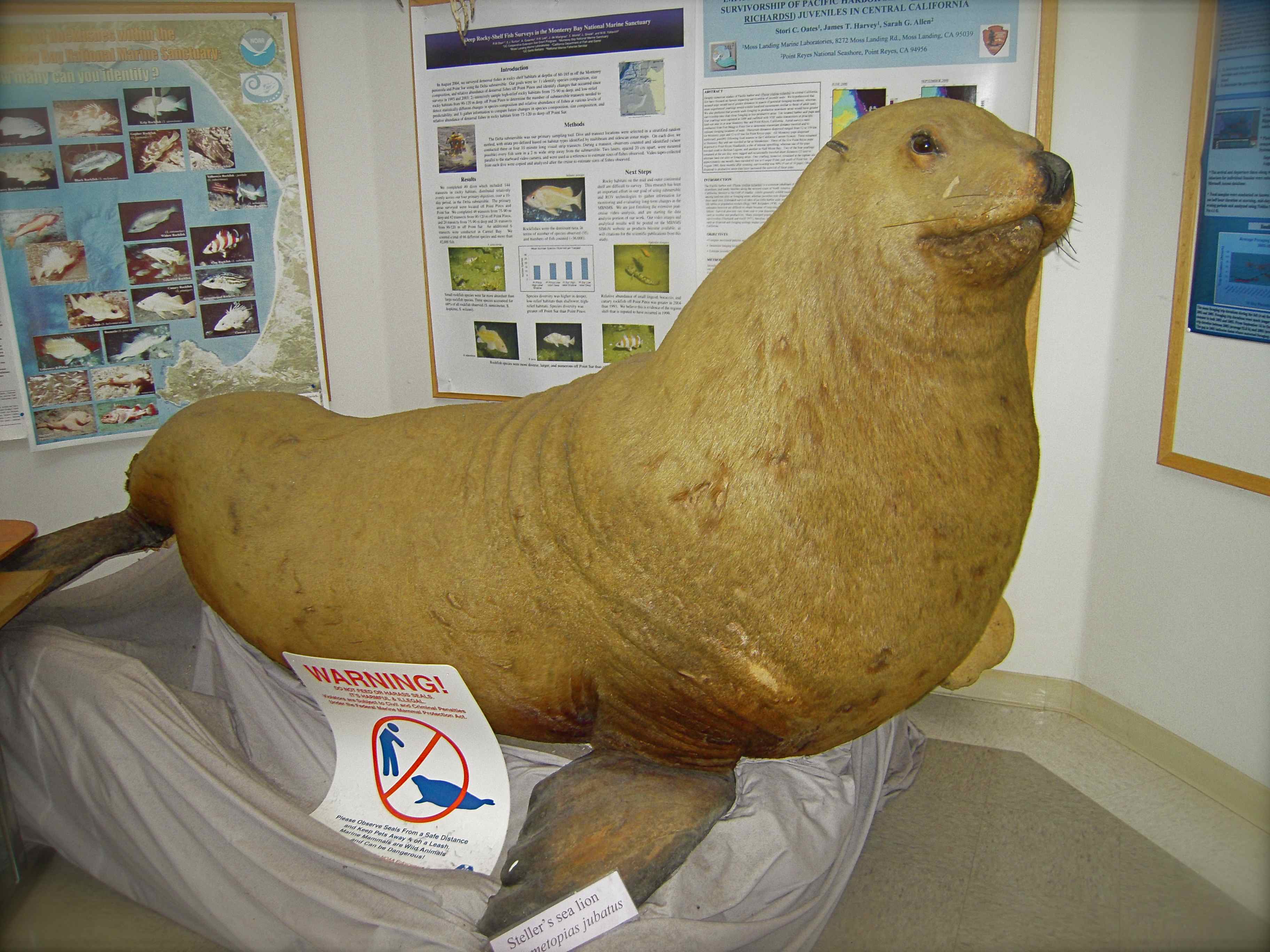
Meet Ralph. He’s our resident stuffed Steller Sea Lion and general pinniped ambassador. Facing off with this giant beast is just one of the many experiences that await tour visitors at Moss Landing Marine Labs. Steller sea lions are largest of the eared seals (check out Ralph’s little ears), and while they typically live along the shores of Alaska and British Columbia, their range extends down to Año Nuevo in California. Males can weigh as much as one ton! But don’t worry, you can get a closeup look at Ralph without fear – it takes a lot to perturb him these days.
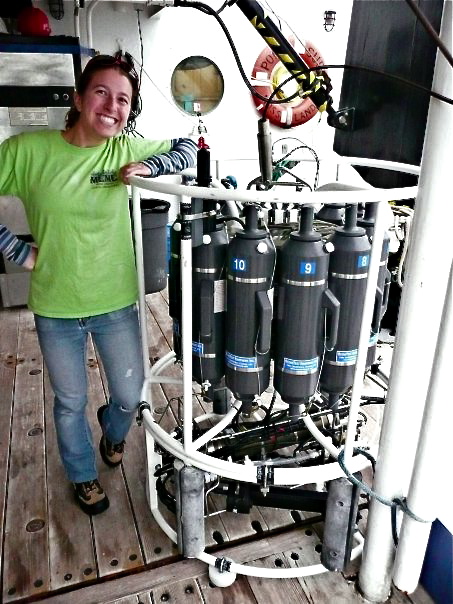
Recent MLML graduate and Drop-In contributor Amanda Kahn poses next to an instrument called a CTD on the deck of the Research Vessel Point Sur. “CTD” stands for Conductivity (or salinity), Temperature and Depth – all properties that the nifty gizmo can record as it’s lowered and raised through the water. The black cylinders are called niskin bottles, and they can be opened and closed to collect a sample of seawater at specific depths. Niskin bottles and other oceanographic equipment snag the spotlight in the mother of all marine science music parodies, “Cruise Cruise Baby” – check it out!