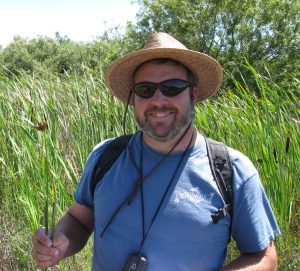

Staff
CCWG staff has several full time staff, but also works with other research affiliates, faculty, and students at Moss Landing Marine Labs and CSUMB. CCWG also is a host site for the California Conservation Corps Watershed Stewards Program.
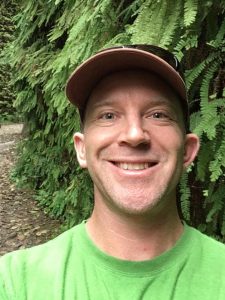
Kevin O'Connor, Program Director
Kevin O’Connor is an ecologist specializing in wetland restoration, monitoring and assessment, and is the Program Director for CCWG. He received his Bachelors degree in Biology and Environmental Studies from UC Santa Cruz in 2004 and his Masters degree in Biology from San Diego State University in 2007 where he investigated the effects of kelp forest disturbance on kelp associated fishes on Santa Catalina Island. Kevin joined CCWG in December 2007 and is currently involved with wetland and upland restoration in the Moro Cojo Slough, the development and implementation of a estuary MPA monitoring program, and participation with the California Wetlands Monitoring Workgroup.
Committee Participation:
- NGO Co-Chair of the California Wetlands Monitoring Workgroup
- Chair of the Science and Data Committee for the Pacific Marine and Estuarine Fish Habitat Partnership
- Member of the Waters Committee for the West Marin Environmental Action Committee
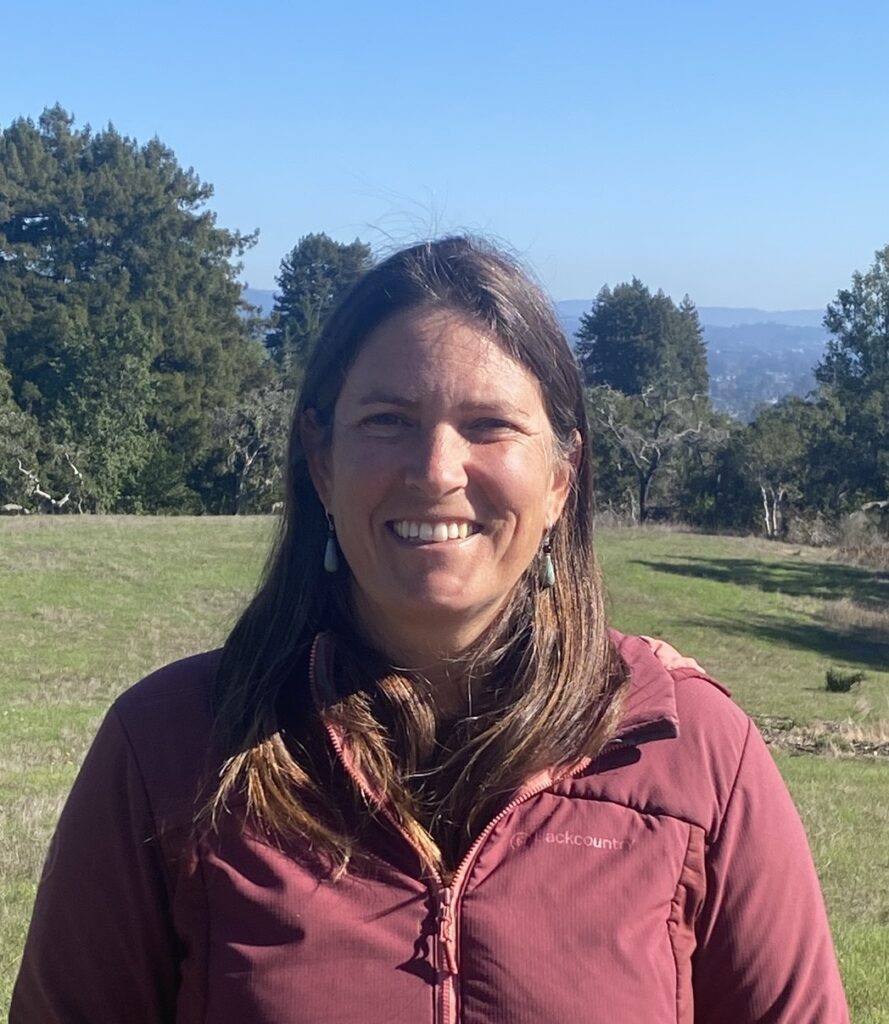
Sarah Stoner-Duncan, Coastal Resilience Program Manager
Sarah is an environmental scientist with a diverse background in applied conservation, ecological monitoring, and community engagement. Since 2011, she has worked with CCWG, where she leads regional coastal resilience initiatives in the Monterey Bay area, manages habitat restoration projects, contributes to wetland monitoring and assessment programs, and coordinates public outreach and education efforts. She also supports CCWG’s work through GIS analysis, grant writing, and visual communication and graphic design.
Her previous experience includes field research on mercury contamination in San Francisco Bay waterbirds, as well as international conservation work with a sea turtle monitoring and education program in Guatemala, and an endangered bird recovery project in Mauritius. She holds a BA in Environmental Studies from the University of California, Santa Cruz, and an MS in Environmental Studies from Antioch University New England, where her graduate work focused on the intersection of conservation biology and environmental education.
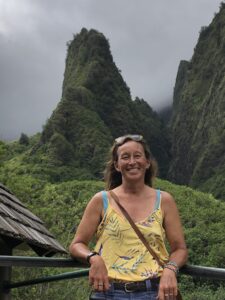
Cynthia Anderson, Operations Manager
Cynthia completed her Bachelor’s degree in Biology (Marine Mammals) at UCSC and her Master’s in Natural Resources (Wildlife Biology) at Humboldt State University. She worked as a biologist, environmental educator, park ranger, and land permit administrator in California, Hawaii, and Oregon prior to coming home to the Central Coast. In addition to her CCWG duties, she currently serves as a base camp manager for a national wildfire incident management team. She is passionate about mentorship, connecting people with nature, and helping facilitate responsible stewardship actions in our communities. When she is not working, she can be found at the beach, in the woodshop, or hiking with family, friends, and a really good dog.
Email: cynthia.anderson@sjsu.edu
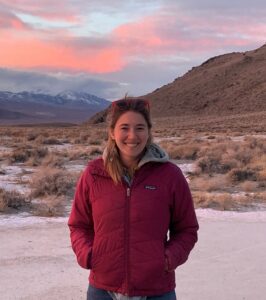
Jenny Balmagia, Conservation Program Manager
Jenny is a water resources scientist with a background in ecology, wetland restoration and assessment, and water quality monitoring. She received her Bachelor's degree in Biology in 2014 from Reed College in Portland, Oregon and her Master's degree in Environmental Science and Management, specializing in water resources management, from the Bren School of Science & Management at UC Santa Barbara in 2020. For her Master's project, she helped design a decision support tool to aid groundwater managers in California's Central Valley in identifying the most suitable sites for managed aquifer recharge projects that have the potential to provide additional benefits to communities and ecosystems. Jenny began working for CCWG in 2015 as a Watershed Stewards Program member assessing watershed health using CRAM and RipRAM, and continued working as a research assistant constructing and studying treatment wetlands and woodchip bioreactors. After leaving to earn her Master's degree she rejoined CCWG in 2021 as the Lower Salinas Valley Watershed Coordinator. In her current role she is responsible for coordinating the implementation of multiple benefit watershed projects through facilitating interagency coordination and partnership development with regional stakeholders including surface and groundwater managers, agricultural entities, and community-based groups. Jenny has also been rock climbing for over 15 years, and when not trying to create healthier watersheds, she can often be found on the side of a rock in the mountains or desert.
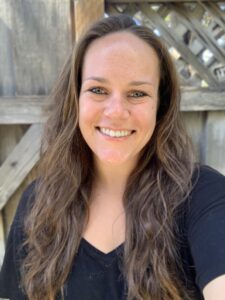
Brooke Fulkerson Norall, Wetland Project Data Manager
Brooke is an environmental scientist with background in data analysis, wetland assessment, and water quality monitoring. She earned her Bachelor's degree in Marine Science in 2018 and her Master's degree in Environmental Science in 2022, both from CSU Monterey Bay. Brooke joined CCWG in 2022 where she coordinates multi-disciplinary projects focused on wetland restoration, coastal resilience, and climate adaptation. Her work includes spatial analysis using drones and GIS software, as well as on the ground habitat assessment, restoration, and environmental data collection. In addition to her scientific work, Brooke is a certified scuba instructor and enjoys spending time underwater in Monterey Bay.
email: brooke.fulkerson@sjsu.edu
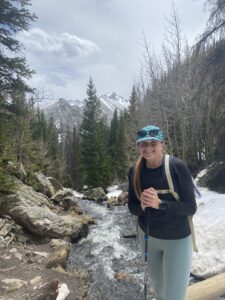
Paige Siegel, NOAA Fellow
Paige is an environmental scientist with a background in coastal ecology and monitoring. She earned her B.S. in Marine Science with a minor in Statistics from California State University, Monterey Bay in 2023, and completed her M.S. in Biology at East Carolina University in 2025. Paige is currently a NOAA Coastal Resilience Fellow supporting the development of the Climate Resilient Monterey Bay Regional Monitoring Program. Her work contributes to the monitoring, planning, and implementation of wetland and dune restoration projects across Monterey Bay through GIS, fieldwork, and collaborative partnerships. Outside of work, she enjoys running, cycling, and camping.
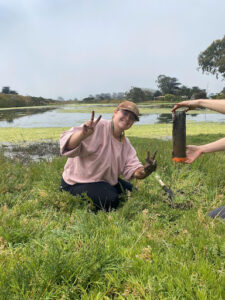
Jess Turner, Water Quality Research Assistant
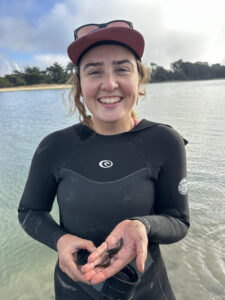
Petra Boester, Habitat Monitoring Specialist
Petra is an ecologist with expertise in habitat monitoring, plant science, and fish identification. She earned her B.A. in Environmental Studies from the University of California, Santa Cruz, where she concentrated in Conservation Science and Environmental Policy. During her time at UCSC, Petra worked as a research field assistant, supporting a graduate student’s fire ecology project and gaining valuable experience in field-based ecological research.
After graduating, Petra served two terms as a national service volunteer with the California Conservation Corps and AmeriCorps through the Watershed Stewards Program, first with Grassroots Ecology and then with the Central Coast Wetlands Group (CCWG). Following her service, she joined CCWG as a Habitat Monitoring Specialist, where she leads fieldwork for the Estuarine Marine Protected Area (EMPA) Monitoring Program, the National Wetland Condition Assessment, and additional wetland monitoring and restoration efforts across the region.
Email: petra.boester@sjsu.edu
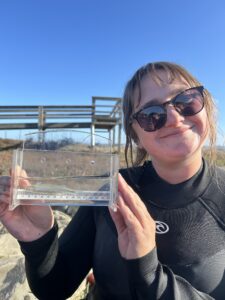
Jaden Schrock, Restoration Project Coordinator
Jaden is an ecologist with experience in land stewardship, habitat restoration, and community engagement. She earned her Bachelor’s degree in Environmental Studies with a concentration in Conservation Science and Environmental Policy from UC Santa Cruz in 2024.
During her undergraduate studies, Jaden served as the Stewardship Coordinator for Friends of the Petaluma River, where she led site maintenance efforts, assisted with events, and supported community outreach. She also worked as a Field Assistant at Younger Lagoon Reserve, contributing to land management, native plant propagation, and ecological monitoring. She joined the Central Coast Wetlands Group in 2024 as a Watershed Stewards Program Corpsmember and later transitioned into a staff role. In her current position, Jaden contributes to restoration site management and project planning, coordinates with project partners, supports environmental monitoring efforts, and helps advance CCWG’s mission to protect and restore coastal ecosystems.
Email: jaden.schrock@sjsu.edu
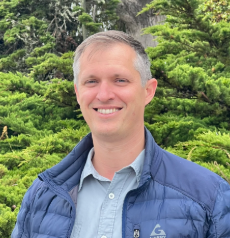
Steven Cunningham, Lab Technician
Steven is a marine scientist with a background in biological, chemical, and physical oceanography. He earned his Bachelor’s degree in Biology with a marine emphasis from Humboldt State University in 2012 and his Master’s degree in Marine Science from Moss Landing Marine Laboratories in 2019. Steven currently manages the Environmental Analytical Laboratory at Moss Landing Marine Laboratories, where he oversees analytical operations and supports a wide range of research initiatives. His work spans ecosystem modeling, aquaculture, analytical chemistry, and environmental monitoring. In addition, Steven works with the CeNCOOS and Synchro programs based at the Monterey Bay Aquarium Research Institute (MBARI), where he has gained extensive experience in field instrumentation, sensor deployments, and environmental sample collection. Collectively, these roles have provided Steven with broad expertise in analytical instrumentation and its application to understanding complex marine ecosystems.
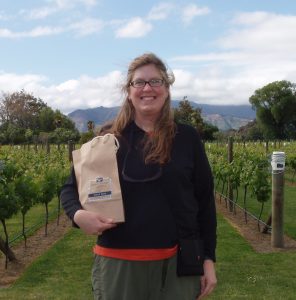
Kamille Hammerstrom, Project Planning Associate
After completing a Bachelor's of Science in Marine Biology and a Master's of Science in Marine Science, I made my way to benthic infauna of California via some stops in seagrasses of North Carolina and Florida and tidal creek communities of South Carolina. I'm interested in disturbance ecology, from erosion and habitat loss in benthic infaunal communities to iceberg scour in Antarctic sponge ecosystems. I also work in restoration, where my tasks range from research and permit writing to planting and monitoring coastal wetland and terrestrial flora. When I'm not analyzing data I can often be found knitting or weaving with naturally dyed fibers.
Brooke Hoffman, Conservation Program Coordinator
Email: brooke.hoffman@sjsu.edu
Steven PoeEddings, Restoration Project Specialist
Email: steven.poeeddings@sjsu.edu
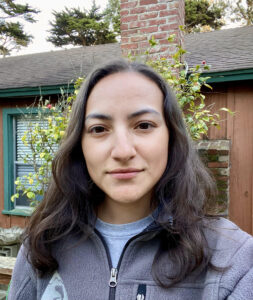
Julianne Chin-Drachman, Watershed Stewardship Program Corpsmember
Originally from Brooklyn, NY, Julianne moved to Central California to join the Watershed Stewards Program (WSP) and pursue a career in watershed conservation and environmental stewardship. She is particularly interested in wetland ecosystems, environmental restoration, water quality, remediation, and the intersection between the environment and public health. She received her Bachelor’s degree in Environmental Science with a Special Concentration in Environmental Biology from Columbia University in 2025. For her senior thesis, she designed, built, and tested a biofilter that uses microbial iron cycling to treat drinking water for arsenic and uranium contamination. She has also worked on projects that studied phytoplankton dynamics in the Long Island Sound, planktic foraminifera as climate proxies, and sharpening satellite images of wildfires to better inform firefighters’ responses. As a WSP corpsmember at CCWG and CC&R, she plans volunteer events, teaches lessons on watersheds, executes restoration projects, and conducts estuary, wetland, and water quality monitoring. In her free time, Julianne likes to hike, dance, learn new instruments, and look for frogs!
Gabriel Anderson, Watershed Stewardship Program Corpsmember
Gabriel grew up in Thousand Oaks, CA, just outside Los Angeles. He spent much of his free time backpacking, SCUBA diving, drone piloting, and doing all sorts of other outdoor activities. Through those experiences, he gained a passion for preserving and protecting the environment both on land and in water. He then went to Cal Poly SLO, where he studied Marine Science. He worked in a variety of research labs, assessing microplastics, monitoring native clam populations, filming educational SCUBA diving videos, and mapping coastal vegetation and geomorphology. During that time, he studied abroad in Cairns, Australia where he performed a study on coral recovery that later went on to be published. Having recently graduated, he is now eager to gain fundamental experience with CCWG in habitat restoration, stakeholder outreach, and EMPA monitoring.
Camille Coriell, Student Assistant
Aleah Carbo, Student Assistant
Leslie Munoz, Dune Restoration and Monitoring Intern
Mauricio Bibriesca, Restoration Intern
Aiden Steinberg, Restoration Intern